Mechanical Integrity of Large-Diameter Rubber Expansion Joints with HDG Flanges and Control Rods on Seawater Pump Discharge Piping
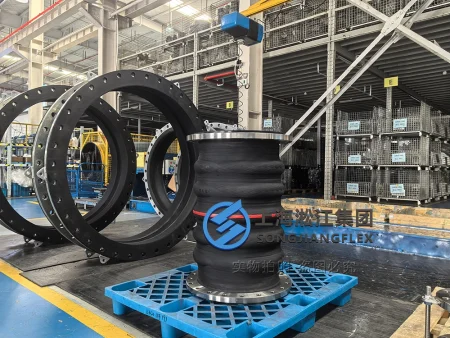
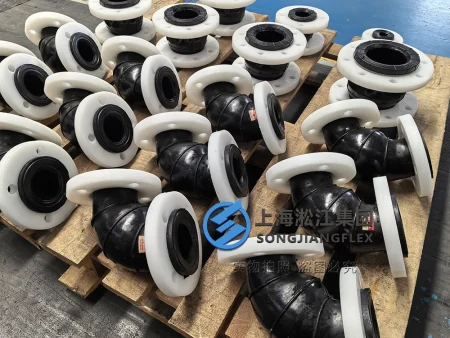
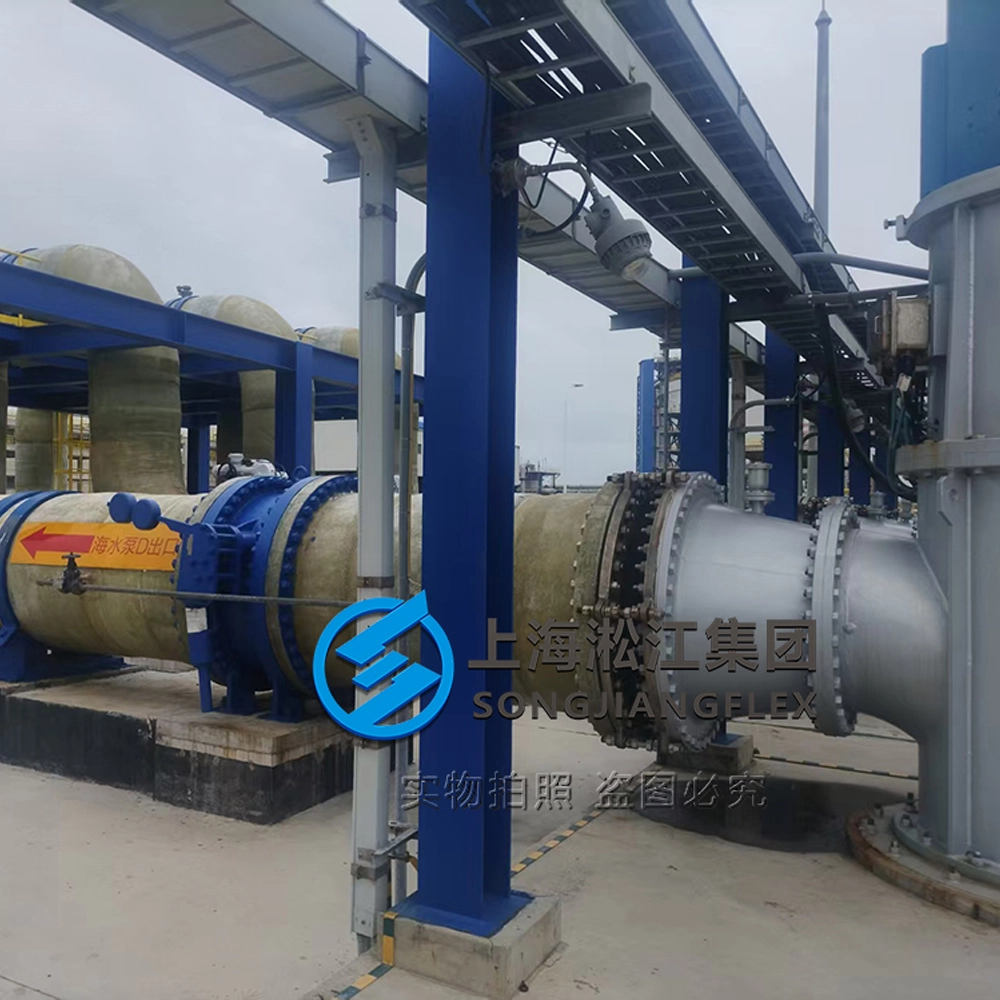
In coastal power generation, desalinization, and industrial chemical facilities, seawater intake pump stations represent critical capital assets. At the discharge manifold, high-volume flow conditions necessitate large-diameter flexible connections—specifically large-diameter rubber expansion joints—to isolate heavy pump-induced vibration, damp hydraulic pulsations, and prevent axial stress transfers to the primary Glass Reinforced Plastic (GRP) or coated steel pipelines.
Operating parameters at these intake points are deceptively moderate, typically running under an ambient temperature envelope of 10°C to 35°C with a nominal working pressure of 0.3 MPa to 0.4 MPa (3 to 4 kg/cm²).
However, the continuous volume displacement and the corrosive nature of natural seawater impose subtle, aggressive failure mechanisms that demand application-specific material compounding and structural design.
Hydrodynamic Stress and Vacuum Collapse Risks
Positioned immediately downstream of vertical or horizontal seawater pumps, a large-diameter rubber joint is subjected to intense boundary-layer turbulence and transient pressure surges. Under nominal operations at 3–4 bar, the bellows expand radially, requiring high-tensile synthetic cord reinforcement layers to distribute the circumferential stress evenly.
The primary mechanical risks, however, occur during transient cycles:
Pump Shutdown and Column Separation: Unscheduled pump trips induce rapid localized pressure drops, occasionally introducing transient vacuum conditions within the discharge line. If a large-diameter bellows is engineered without adequate structural rigidity, negative pressure can deform the elastomer arch inward, throttling fluid velocity and causing localized tearing.
Micro-Erosion from Suspended Solids: Despite basic filtration at the intake wet well, natural seawater contains micro-grit, suspended silts, and abrasive marine organic fragments. At velocities common in large-diameter pipelines, these particulates create continuous low-angle impingement wear along the bottom center lining of the flexible connector.
Material Formulation: Combating Chemical Degradation
Selecting a standard commercial-grade elastomer for seawater circulating systems is a critical engineering miscalculation. While ambient temperatures up to 35°C do not threaten thermal limits, the chemical profile of coastal seawater drives material degradation:
Chloride and Halogen Resistance: High chloride concentrations, combined with active bio-fouling mitigation protocols (such as continuous sodium hypochlorite dosing), generate free chlorine radicals. Standard natural rubber or low-grade elastomers suffer from accelerated cross-link breaking, leading to hardening, micro-cracking, and loss of tensile elasticity.
Optimized EPDM Matrix: Technical specifications for seawater intake lines mandate a proprietary, high-density Ethylene Propylene Diene Monomer (EPDM) or high-grade Chloroprene (CR) compound. This modified elastomer framework provides full chemical inertness to dissolved salts and residual oxidants while maintaining the dynamic flexibility needed to dampen continuous structural oscillations.
Triple-Protection Architecture: Full Rubber Flanges, HDG Steel, and Control Rods
For large-diameter pipelines handling corrosive media, the flange interface requires both extreme mechanical strength and total isolation from atmospheric and fluid corrosion. Standard painted steel backing flanges routinely suffer from paint delamination and aggressive crevice corrosion when deployed in coastal salt-spray environments.
To guarantee zero maintenance downtime, high-wear intake lines utilize a coordinated engineering strategy:
1. Hot-Dip Galvanized (HDG) Carbon Steel Flanges
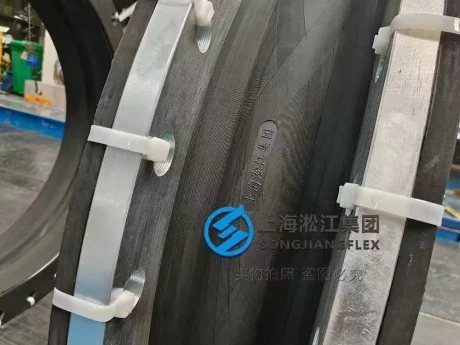
The mechanical clamping force required to seal the joint against GRP headers is supplied by standard, high-rigidity carbon steel flanges. To prevent atmospheric oxidation and accelerated rust under saline air, these steel components undergo a comprehensive Hot-Dip Galvanizing (HDG) thermal process. The zinc-iron alloy layer provides sacrificial protection and mechanical durability, preventing metallurgical degradation under continuous high-humidity coastal exposure.
2. Integral Full-Rubber Flange Face (Wide-Arch Design)
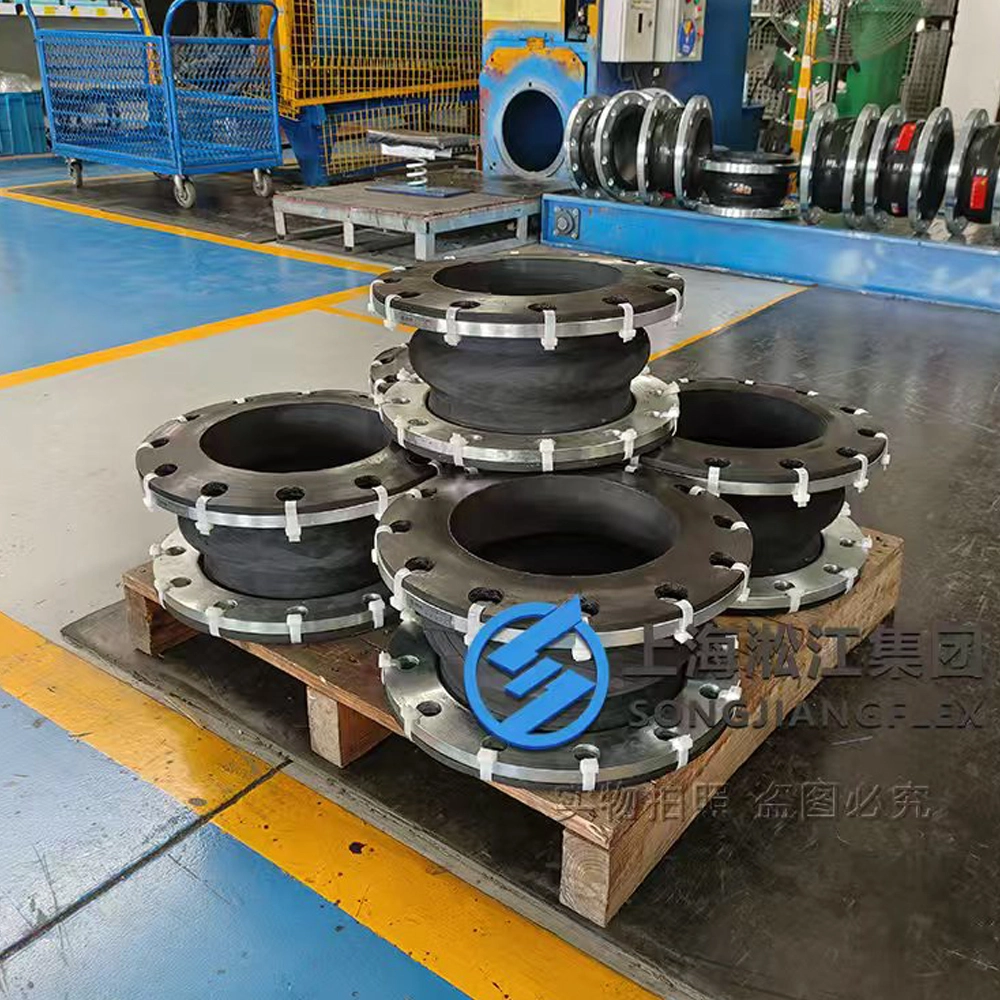
The vulcanized rubber layer extends completely over the internal faces of the HDG flanges, serving as an integrated, autonomous sealing gasket across the entire counter-flange profile. When bolted against GRP counter-flanges, this design ensures that the internal process seawater is physically isolated from the steel rings. This configuration eliminates galvanic corrosion vectors, protects fragile GRP pipe lips through uniform bolt load distribution, and maintains an unyielding seal under fluctuating pressures.
3. Integrated Control Rod Structural Framework
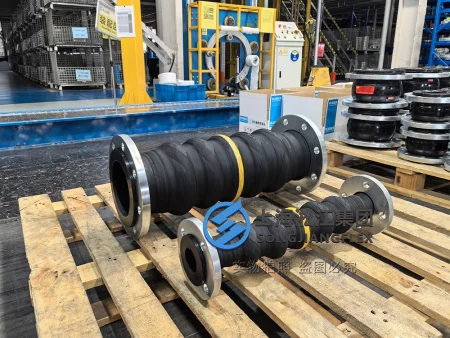
To withstand the tremendous pressure surges and piping thrust forces generated during pump startup, heavy-duty control rods (tie rods) are configured across the elastomer arch. These structural steel rods securely lock the axial movement of the joint, preventing catastrophic over-elongation and absorbing the mechanical shock waves common to high-volume discharge manifolds.
Engineering Summary
For municipal and industrial infrastructure engineers, optimizing a large-diameter seawater pump line requires matching the flexible connection’s durability with the long design life of GRP piping. Upgrading to a specialized, vacuum-stabilized EPDM rubber expansion joint configured with hot-dip galvanized (HDG) carbon steel flanges, wide-arch full rubber faces, and integrated control rods ensures years of maintenance-free vibration damping, isolating critical pumping assets from catastrophic leakage and costly pipeline downtime.