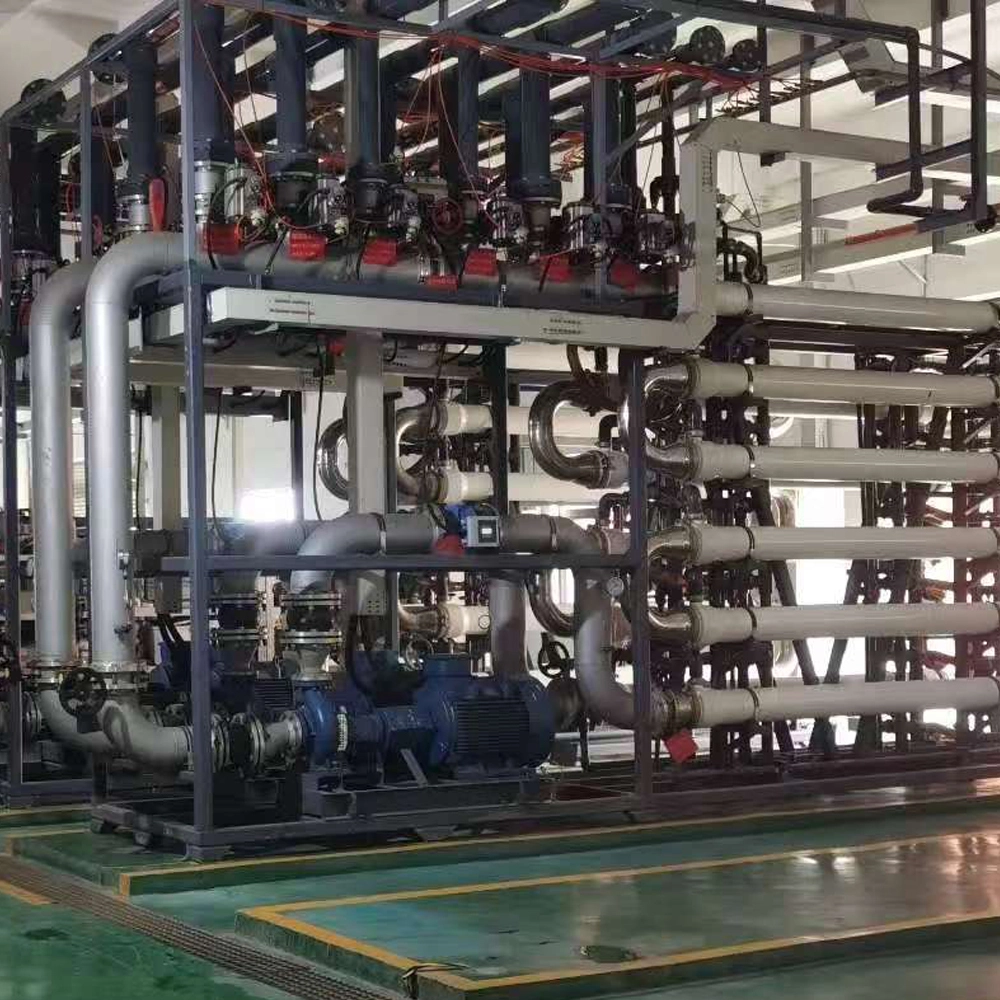
In modern environmental engineering infrastructure, managing the structural integrity of industrial wastewater treatment plants (WWTP) involves navigating complex fluid dynamics and extreme chemical parameters. Unlike municipal sewage lines, industrial wastewater carries unpredictable concentrations of heavy metals, organic solvents, abrasive suspended solids, and aggressive pH fluctuations ranging from highly acidic processing effluents to alkaline neutralization solutions.
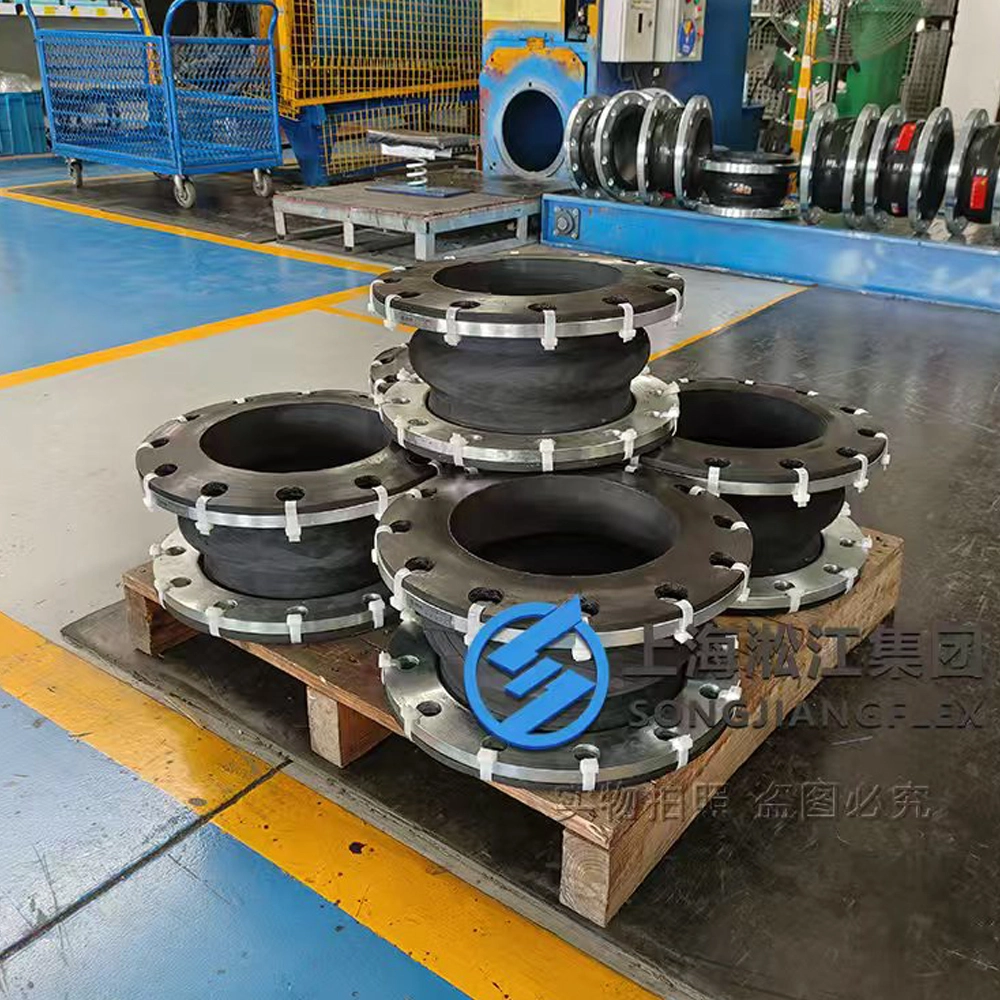
While fixed steel, GRP, or HDPE pipelines handle straight fluid runs, the dynamic interfaces—specifically pump suction/discharge lines, sludge transfer loops, and aeration headers—suffer severe stress. Installing high-performance rubber expansion joints is standard technical practice to isolate mechanical equipment vibration, damp transient water hammer shocks, and accommodate continuous thermal expansion.
However, generic flexible connections deployed in these aggressive fluid matrices fail rapidly via chemical degradation or physical erosion. Achieving long-term pipeline uptime demands an engineering-level evaluation of elastomer formulation and structural reinforcement.
The Dual Threat: Chemical Polymer Degradation and Hydraulic Fatigue
Piping elements in industrial wastewater skids face two concurrent failure vectors that can trigger environmental non-compliance and catastrophic plant shutdowns:
1. Solvent-Induced Volumetric Swelling and Acid Hardening
Industrial effluents from chemical processing, pharmaceutical synthesis, electroplating, and pulp and paper mills contain active agents such as free chlorine, aromatic hydrocarbons, concentrated nitric/sulfuris acids, and oily residues. When a standard commercial rubber joint is exposed to these media, the fluid penetrates the elastomer’s molecular cross-links.
This causes irreversible volumetric swelling, blistering, and structural softening (common with hydrocarbon exposure on generic compounds) or accelerates polymer chain-scission, leading to brittleness, micro-cracking, and rapid pressure failure under moderate stress.
2. High-Frequency Cycling Stress and Water Hammer Induction
Wastewater transfer and dosing pumps cycle on and off frequently to match plant influx parameters. This continuous operational modulation introduces repetitive hydraulic surges (water hammer) and micro-pulsations into the manifold.
If the flexible connection lacks high-tensile structural fabric plies or vulcanized steel wire reinforcing cords, the bellows suffer localized fatigue. This results in progressive layer delamination and localized bursting downstream of the primary fluid mover.
Structural and Material Engineering Specifications for Industrial Effluents
To ensure full technical compliance inside a severe industrial wastewater filtration system, flexible connections must transition from commodity parts to engineered components configured for specific environmental parameters:
EPDM Matrices for Acid-Base Neutralization: For processing lines handling acidic pickling liquors, alkali cleaning solutions, or general wastewater neutralization loops up to 90°C, a high-density, peroxide-cured Ethylene Propylene Diene Monomer (EPDM) compound is specified to deliver superior oxidative and polar-chemical resistance.
- High-Acrylonitrile NBR Cores for Hydrocarbon-Laden Sludge: For petrochemical refinery effluents, oily sludge processing manifolds, and grease-trap skimming lines, an inner tube compounded from high-acrylonitrile Nitrile (NBR) rubber is mandatory to ensure absolute volume stability against mineral oils and hydrocarbon solvents.
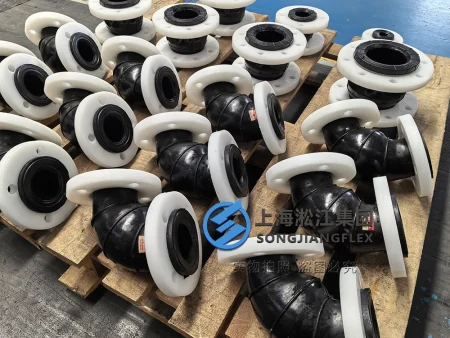
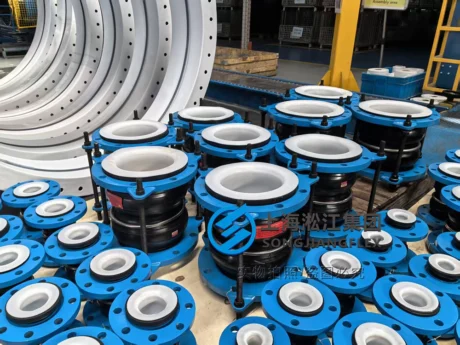
Premium Virgin PTFE Liners for Extreme Chemical Resistance: In critical lines handling mixed aggressive process chemistry, chemical dosing agents, or concentrated oxidizers, utilizing elastomers alone is insufficient. For these advanced configurations, an integrated, high-purity white PTFE (Polytetrafluoroethylene) liner is vulcanized inside the rubber bellows face. The PTFE liner acts as an impenetrable chemical shield that prevents fluid permeation and chemical attack, while the underlying EPDM or NBR rubber body retains its full flexible structure to absorb massive pump displacement and high-frequency acoustic vibrations.
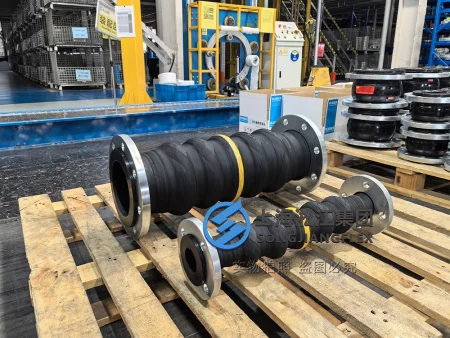
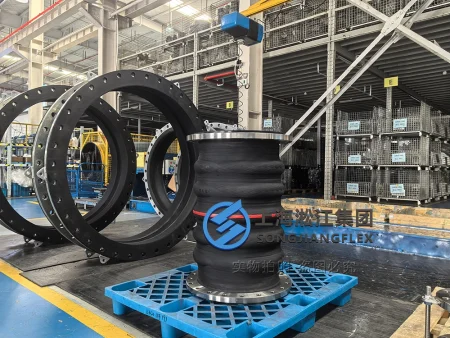
Pressure-Stabilized Reinforcement: Bellows architecture must integrate multi-layer, high-tenacity synthetic fabric cord matrices bound by structural steel rings, ensuring the flexible joint maintains geometric stability under vacuum-suction lines or full-rated operating pressures without ballooning.

Global Application Matrix: Target Sub-Sectors and Positioning
Specialized wastewater-series rubber expansion joints are deployed across critical nodes within heavy industrial water management systems:
Chemical and Pharmaceutical Plants: Main process water treatment loops, spent acid regeneration pipe arrays, and high-concentration chemical feed pump manifolds.
Electroplating and Surface Finishing Facilities: Acidic etching fluid disposal lines, heavy-metal sludge recycling loops, and toxic wastewater rinse tanks.
Petrochemical and Oil & Gas Refineries: Oily process water headers, dissolved air flotation (DAF) unit inlets, and refinery blowdown circulation loops.
Pulp and Paper Manufacturing: Black liquor recovery piping systems, bleached effluent transfer lines, and raw water filtration skids.
Electronics and Semiconductor Fabrication: Hydrofluoric acid (HF) wastewater neutralization loops and ultra-pure water recycling filter lines.
Engineered Manufacturing and Customization Guidelines
Standard, off-the-shelf flexible connectors cannot satisfy the concurrent chemical resistance and structural movement parameters demanded by modern industrial environmental control infrastructure. Complete operational safety requires a manufacturing strategy tailored to precise system boundary conditions based on precise structural customization codes:
Proprietary Compound Blending: Modifying base polymers (EPDM, NBR, CR, FKM) with advanced vulcanizing chemistry guarantees verifiable tensile profiles and fluid-inert parameters for a plant’s specific chemical composition.
Tailored Flange and Standard Integration: Backing rings must match global pipeline standards (including ASME B16.5, DIN EN 1092-1, JIS B2220), utilizing corrosion-resistant metallurgy such as Hot-Dip Galvanized (HDG) carbon steel, 304/316L stainless steel, or specialized protective epoxy coatings to withstand ambient chemical mist.
Custom Accessory Configurations: Based on localized piping dynamics, assemblies require integration with rigid control rods to handle excessive blind-end thrust forces, vacuum-reinforced rings for high-suction intake pump networks, or specialized structural geometry to prevent boundary layer turbulence.