In modern industrial fluid infrastructure, managing pipeline longevity requires more than calculating hydraulic pressures and thermal expansion coefficients. Reliability engineers frequently face two silent, highly destructive vectors: galvanic corrosion (electrochemical degradation) and stray current interference.
While generic rubber joint designs are specified to isolate mechanical vibrations and accommodate misalignment, standard configurations with conductive metal reinforcement or direct metal-to-metal bolt clamping profiles fail to address electrical continuity along the pipeline.
To break the electrical path between dissimilar metals, protect sensitive instrumentation, and maintain the integrity of impressed current cathodic protection (ICCP) systems, implementing an engineered insulated rubber compensator has shifted from an optional enhancement to a critical technical mandate across capital-intensive industries.
The Physics of Degradation: Why Electrical Isolation is Mandatory
Piping systems do not operate in an electrically inert environment. When two dissimilar metals (such as a stainless steel pump casing connected to a carbon steel header, or a titanium heat exchanger tied to copper-nickel lines) come into direct contact in the presence of an electrolyte, a galvanic cell is formed. The metal with the lower electrochemical potential acts as an anode and undergoes accelerated sacrificial corrosion.
Furthermore, heavy industrial plants—especially those utilizing high-power electric motors, electrolysis arrays, or localized welding networks—routinely leak electrical current into the ground. These stray currents utilize low-resistance buried or submerged metallic pipelines as return paths. Where the stray current leaves the metal pipe to re-enter the soil or fluid medium, intense localized electrolytic pitting occurs, often breaching thick-walled pipes within months.
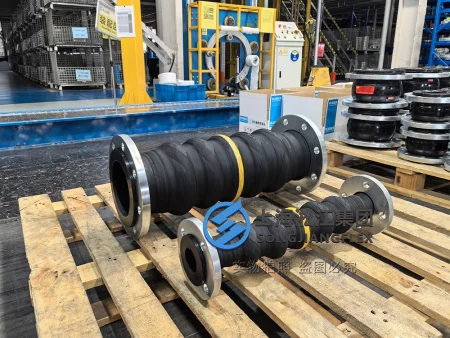
An insulated rubber compensator solves this by utilizing non-conductive, high-dielectric elastomer compounding combined with insulated bolt sleeve inserts and non-conductive gasket barriers. This architecture effectively interrupts the electrical continuity of the pipeline, creating a high-resistance physical break that stops both galvanic electron transfer and stray current propagation.
Global Application Matrix: Critical Industries and Positioning
The deployment of dielectric and insulated rubber compensator elements is standard engineering practice across several severe-service industrial sectors:
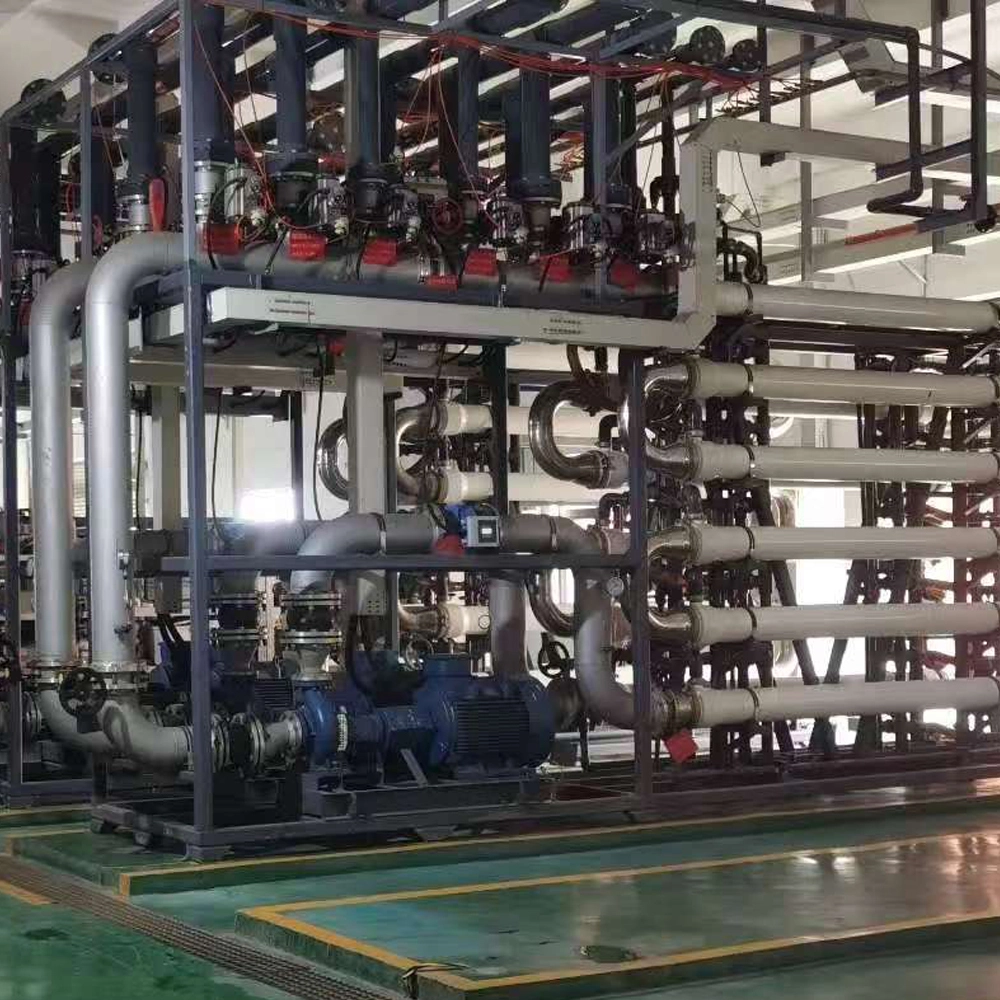
1. Water Treatment and Desalination Infrastructure
Positioning: Pump suction and discharge lines, isolation valves at water intake wells, and connections to reverse osmosis (RO) high-pressure pump manifolds.
Technical Necessity: High-salinity brine functions as an ultra-low resistance electrolyte, drastically accelerating galvanic cells between high-alloy pumps and carbon steel distribution headers.
2. Marine and Offshore Engineering
Positioning: Sea chest suction lines, ballast water circulating systems, and onboard condenser cooling loops.
Technical Necessity: Hull-mounted sacrificial anodes or ICCP systems require strict electrical zoning. Uninsulated lines allow protective currents to bleed off, leaving localized sections of the hull or internal piping unprotected against seawater corrosion.
3. Chemical and Petrochemical Processing
Positioning: Inlets and outlets of electrolytic cells, chemical storage tank transfer lines, and acid/alkali loading pump stations.
Technical Necessity: Process chemicals often possess highly conductive properties. Isolating the pipe runs prevents systemic stray currents from migrating into automated control instruments and flowmeters.
4. Municipal Utilities and District Heating
Positioning: Transition points where cross-country buried pipelines enter indoor pump stations, and interfaces between municipal main lines and local distribution loops.
Technical Necessity: Buried cross-country pipelines are susceptible to stray currents from nearby DC rail transit systems or high-voltage power grids. Insulating joints at station entry points traps currents externally, preventing damage to facility equipment.
5. Metallurgical and Smelting Plants
Positioning: Blast furnace cooling water jackets, scale pit wash lines, and induction furnace cooling water loops.
Technical Necessity: High-voltage induction fields generate massive localized electromagnetic interference (EMI). Non-insulated flexible connectors act as induction loops, causing dangerous localized heating and electrical arcing across pipe gaps.
Technical Specifications for Achieving High Dielectric Isolation
Engineering a dependable insulated flexible connector requires maintaining a strict balance between elastomeric flexibility and dielectric strength. Modern industrial manufacturing codes dictate specific customization guidelines to satisfy concurrent mechanical and electrical tolerances based on precise operational boundary parameters:
Dielectric Material Modification: The base elastomer matrix (such as high-purity EPDM for water lines, oil-inert NBR for hydrocarbon streams, or chemical-resistant Chloroprene) must be custom-compounded using non-conductive reinforcing agents. This modification guarantees an insulation resistance rating exceeding 100MΩ at 1000V DC to ensure complete current blocking.
Integrated Bolt Isolation Kits: Electrical isolation cannot rely on the rubber bellows alone. System specifications must integrate high-dielectric engineering plastic (PTFE, Polyimide, or specialized Phenolic) bolt sleeves and isolating washers. This full assembly isolates the backing flanges from the continuous metal bolt-load path.
Hydrodynamic and Dimensional Alignment: Vacuum-stabilized interior linings are required for negative-pressure suction circuits to prevent bellows collapse. Concurrently, specialized multi-arch profiles must be configured for lines demanding massive lateral or axial offsets without compressing the electrical isolation gap.