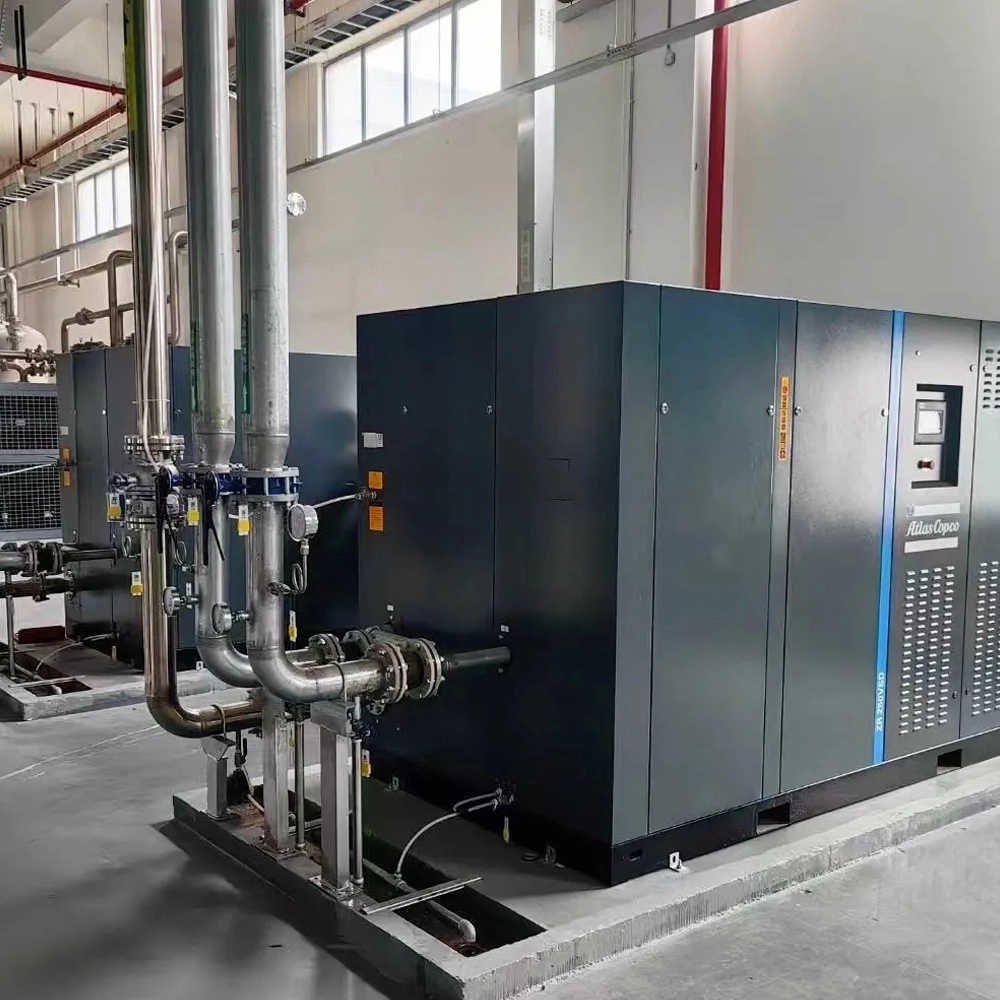
In heavy-duty industrial utility plants, the reliability of compressed air and nitrogen gas delivery networks rests heavily on the vibration isolation of primary prime movers. High-capacity centrifugal compressors—such as the Atlas Copco ZH series units—generate massive mass flow rates that inevitably introduce continuous thermal expansion and multi-axial micro-vibrations into downstream headers.
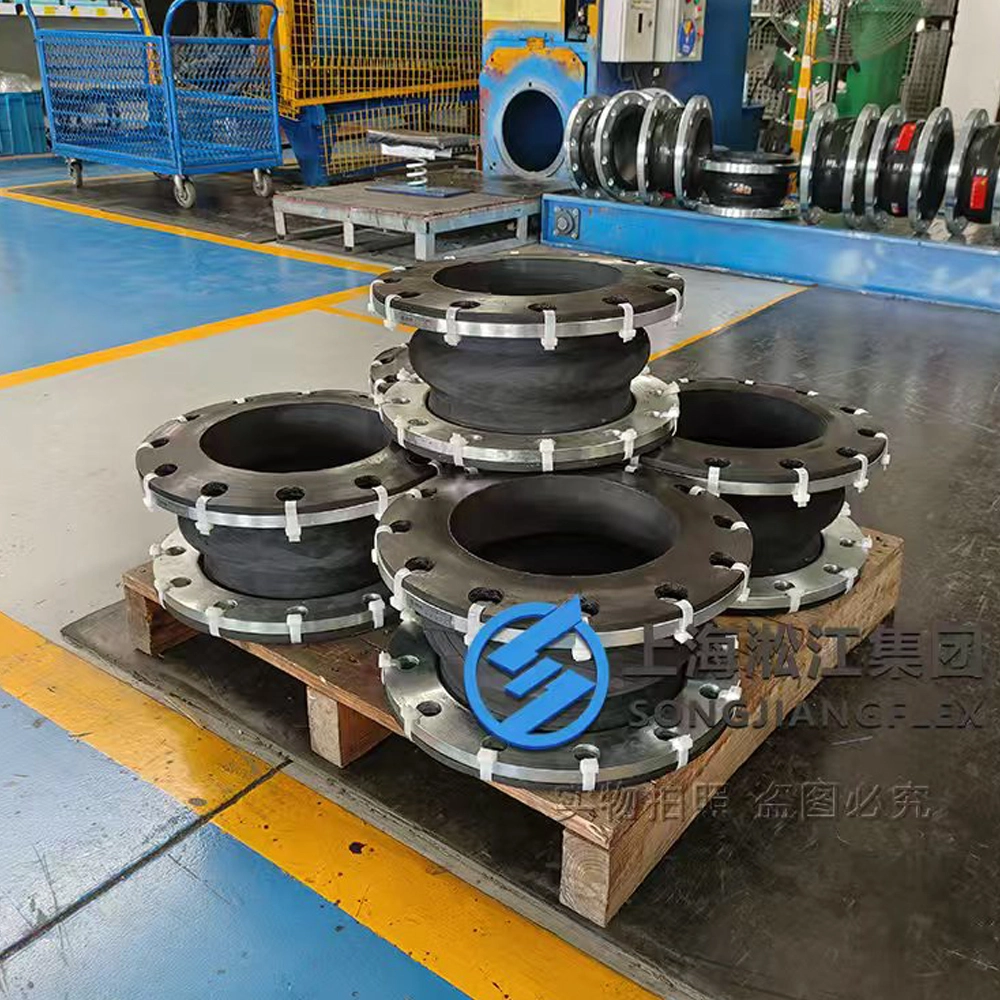
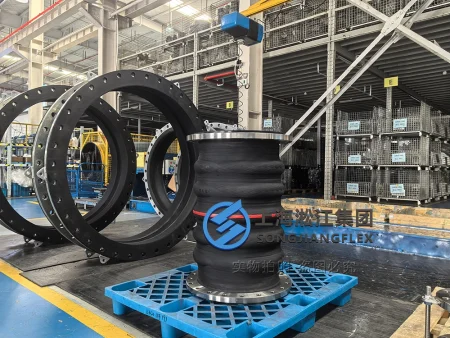
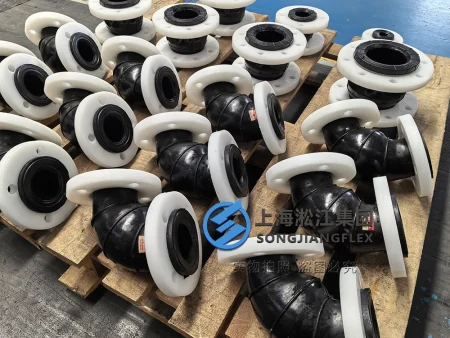
While these advanced centrifugal machines, often configured with premium high-efficiency ABB motors, run with high thermodynamic efficiency, the discharge piping remains a vulnerable junction. Failing to install a properly specified, custom-engineered rubber expansion joint can cause structural fatigue on compressor housing flanges, leading to air leaks and mechanical downtime.
Managing these flexible connections demands a precise understanding of pipeline sizes (ranging from DN125, DN150, to DN200) and proper material grading based on the operational fluid matrix and temperature fluctuations.
Chemical Compatibility: Oil-Free vs. Oiled Operating Environments
Selecting the appropriate elastomer matrix for a centrifugal compressor or nitrogen booster compressor requires strict verification of the process fluid’s chemistry. Compressed air under high velocity reacts differently depending on the presence of lubricating oils.
1. Oil-Free Air & Nitrogen Infrastructure (ZH Series Specifications)
Large-capacity centrifugal machines, such as the Atlas Copco ZH800+ oil-free centrifugal compressor/nitrogen compressor (commonly paired with premium ABB high-efficiency motors at DN150 pipe diameters), the ZH900-4.6 centrifugal unit connected to heatless adsorption dryers (DN200 lines), and the ZH450-5.5bar configuration (DN125 piping), discharge completely oil-free air or gas.
For these oil-free setups, the primary degradation factor is purely thermal-oxidative aging. The recommended elastomer matrix utilizes high-grade, peroxide-cured Ethylene Propylene Diene Monomer (EPDM). Based on precise discharge temperatures, our engineering matrix guarantees a 3-year structured warranty under the following grading parameters:
Below 80°C: Premium Marine-Grade EPDM bellows for stable, long-cycle vibration isolation.
80°C to 100°C: High-Density Thermal EPDM with advanced peroxide vulcanization to resist continuous thermal-oxidative hardening.
101°C to 130°C: Special-Formulation Over-Engineered High-Temperature EPDM, incorporating heavy-duty aramid reinforcement layers to prevent polymer cross-link degradation under continuous thermal load.
2. Oiled Compressor & Heavy Hydraulic Systems
For standard oiled centrifugal compressors, lubricated rotary screw networks, and downstream filtration return lines, the compressed air carries an aggressive aerosol of synthetic or mineral lubricant oils. Standard EPDM fails via rapid volume swelling and blistering when exposed to hydrocarbon vapors.
These environments require custom-compounded Acrylonitrile Butadiene Rubber (NBR) or Fluoroelastomer (FKM) compounds. Our engineered oiled-service flexible connections carry a full 3-year warranty based on the following precise temperature break points:
Below 60°C (Ambient to Moderate Cold Run): Standard High-Acrylonitrile NBR core bellows, ensuring absolute volume stability and zero hydrocarbon permeation.
60°C to 90°C: Enhanced High-Tensile NBR matrix with structurally reinforced vulcanization agents to counter high-velocity hot oil vapors.
90°C to 100°C: Special Extra-Thick NBR sacrificial lining designed to withstand continuous elevated oil-discharge temperatures without softening.
101°C to 140°C Extreme Thermal Range: Ultra-Spec Fluoroelastomer (Viton/FKM) rubber bellows. This premium material maintains its cross-link structure and mechanical modulus up to 140°C, providing the ultimate mitigation solution against concurrent thermal and hydrocarbon degradation.
Mechanical Reinforcement and Structural Rigidity
Operating at typical pressures like 4.6 bar or 5.5 bar might appear moderate, but the dynamic pressure fluctuations immediately downstream of a centrifugal machine create intense cyclical stress. Every custom high-temperature rubber expansion joint is built with an internally vulcanized, multi-layer high-tensile synthetic fabric core reinforced with carbon steel wire cords.
This interior structure ensures the bellows maintain geometric stability and do not delaminate under continuous thermal elongation or lateral piping offsets.
Summary for Compressor Station Engineers
Optimizing a compressor piping network requires precise selection of flexible components. Matching your piping specifications with custom-compounded, application-specific rubber expansion joints eliminates chronic leakage risks, extends the service life of compressor housings, and protects your capital infrastructure.
Whether deploying a DN150 connection on a ZH800+ oil-free nitrogen compressor or installing a specialized 140°C NBR/FKM joint on a lubricated booster circuit, utilizing the correct elastomeric formulation guarantees a minimum of three years of continuous, high-performance operation.