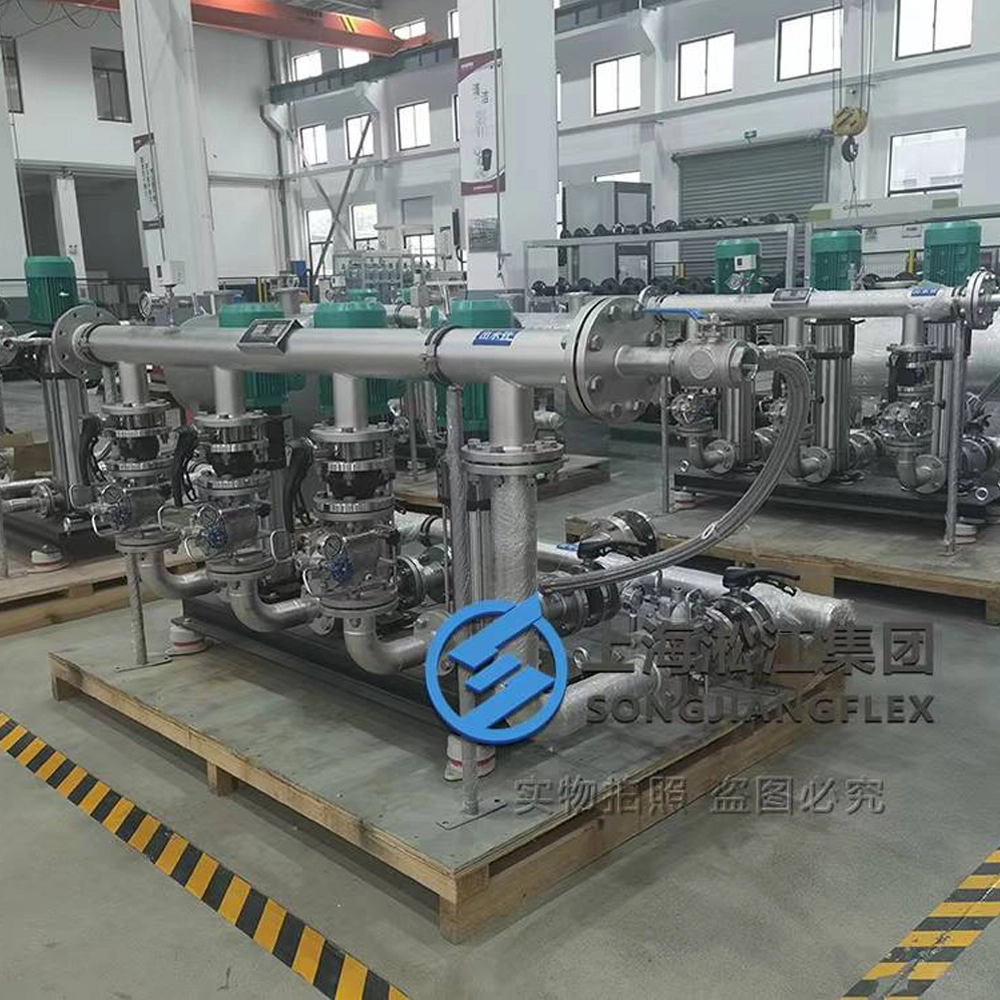
In modern commercial high-rises, residential complexes, and large-scale industrial parks, non-negative pressure variable frequency water supply systems have become the gold standard for secondary water distribution. By overlaying municipal pressure without creating a vacuum, these systems offer unparalleled efficiency and energy savings.
However, mechanical engineers, plumbing designers, and skid-mounted pump integrators frequently encounter an inherent physical liability in these setups: severe pipeline vibration, low-frequency structure-borne noise, and transient water hammer.
When multiple vertical multi-stage pumps operate in parallel under continuous variable frequency control,剛性 (rigid) stainless steel manifolds are subjected to relentless cyclic stresses. Without a robust, elastomeric interface to isolate these forces, systems inevitably suffer from loosened flange bolts, instrumentation drift, and catastrophic pipeline fatigue or ruptures.
🛠️ The Systemic Pain Points of Variable Frequency Pump Packages
To engineers managing complex secondary water supply installations, the mechanical vulnerabilities of rigid piping manifest in four primary ways:
1. Dynamic Resonance from VFD Frequency Swings
Unlike fixed-speed pumps, variable frequency drive (VFD) systems constantly modulate pump speeds between 0 Hz and 50 Hz to match fluctuating real-time demand. This continuous adjustment shifts the mechanical vibration frequency of the pump group dynamically. If the excitation frequency matches the natural resonant frequency of the stainless steel manifold or the valve array, pipeline resonance occurs. This results in violent physical shaking of the pipework and rapid deterioration of joint seals.
2. Structure-Borne Noise and Environmental Compliance
Secondary water supply pump rooms are usually located in the basement or utility wings of high-rise structures. The high-frequency mechanical hum and motor vibrations generated by multi-stage centrifugal pumps easily migrate through rigid connections, pipe hangers, and anchoring brackets into the building’s concrete core. This low-frequency structure-borne noise propagates upward across dozens of floors, degrading occupant comfort and frequently violating local noise ordinances during project commissioning.
3. Transient Water Hammer and Cyclic Fluid Impact
VFD systems rely on smart automation to constantly handle “lead-lag” cycles—staging, destaging, waking, and sleeping individual pumps as demand spikes or drops. The sudden closing of a check valve or an emergency pump shutdown instantly shifts fluid velocity, generating a severe water hammer pressure wave. Because rigid stainless steel pipelines cannot cushion or deform under this impact, the reactive force strikes directly against valve flanges and the pump casing.
4. Locked-In Mechanical Stress from Skid Assembly
To optimize space, modern booster systems use tight, compact skid-mounted packages. In these tightly configured configurations, multiple pipe runs involve rapid changes in direction, elbows, and dense flange arrangements. During factory welding or onsite connection to the municipal supply line, any minor misalignment or parallel concentricity error locks severe assembly stress into the system. This stress continuously pulls at the pump nozzles, causing shaft misalignment and premature mechanical seal failures.
💡 Why a Premium Rubber Expansion Joint is the Engineered Solution
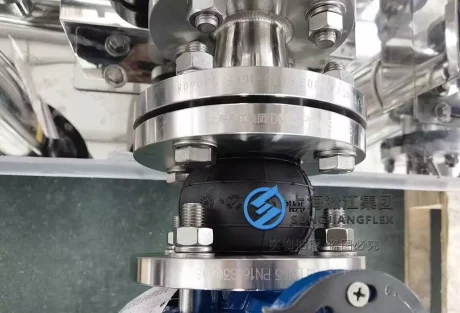
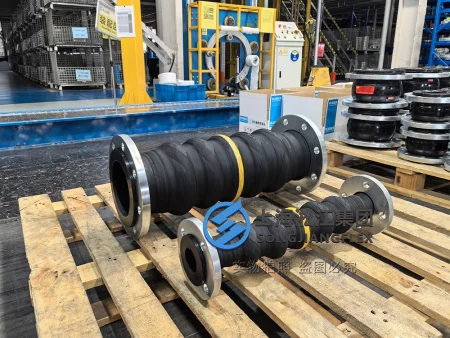
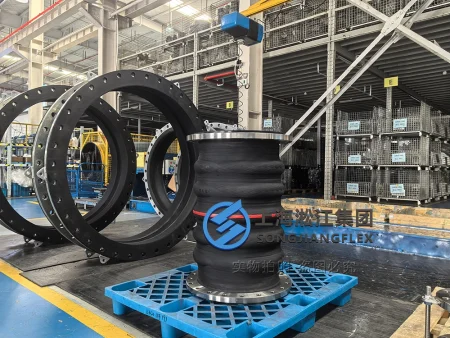
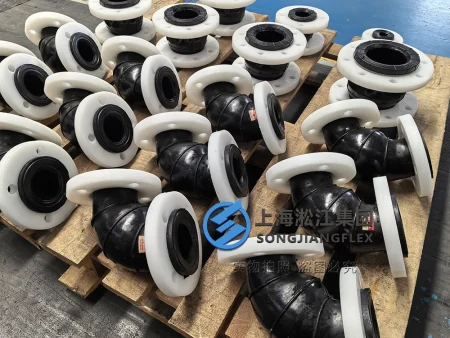
Attempting to anchor a vibrating system with heavy rigid pipe supports or stiffer structures is a brute-force approach that often accelerates joint failure. Integrating a high-performance rubber expansion joint between the vertical multi-stage pump discharge/suction nozzles and the main collector manifold provides the flexible, resilient damping boundary required to protect the installation.
[ Vertical Multi-stage Pump ] ──> [ Premium Rubber Expansion Joint ] ──> [ Valves & Controls ] ──> [ Main Manifold ]
                                                 │
                                                 └──> Absorbs multi-axial movement & attenuates water hammer waves
1. Multi-Axial Displacement Compensation
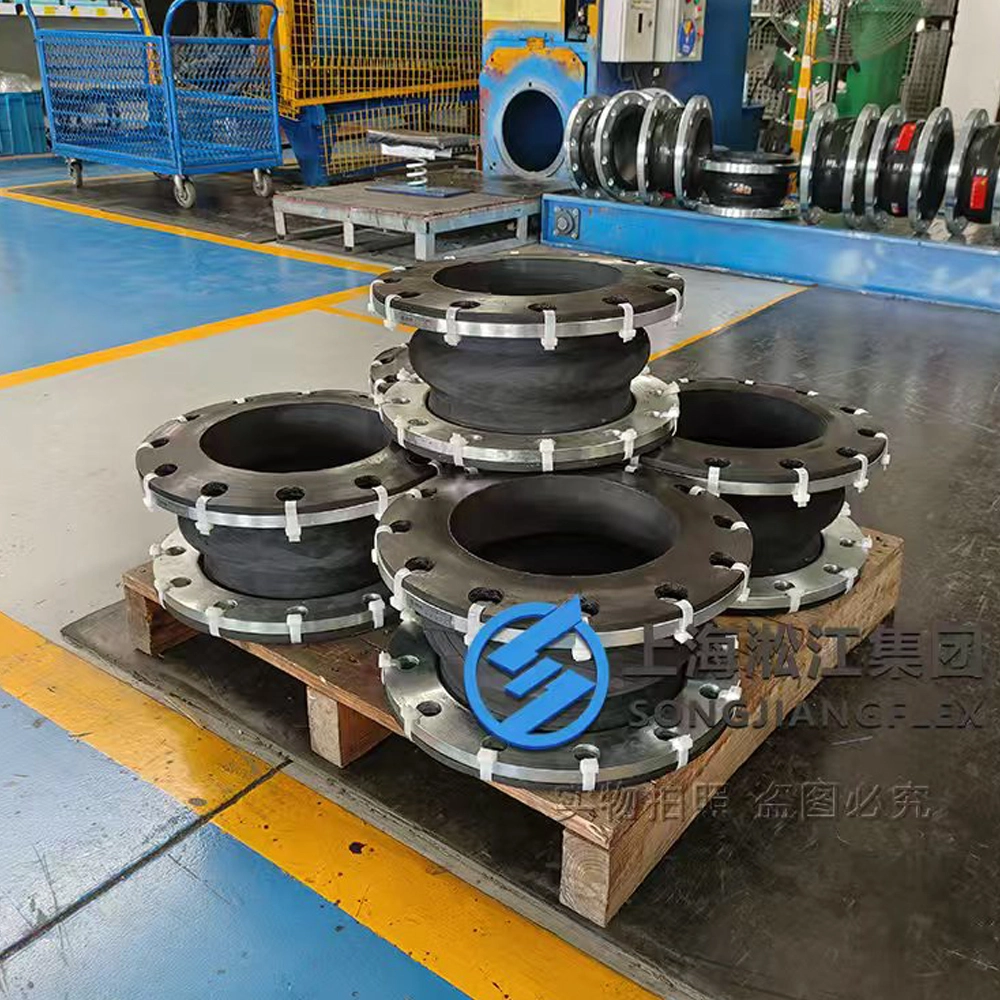
A premium rubber expansion joint (also known as a flexible rubber joint or rubber bellows) offers outstanding omnidirectional flexibility. Within a remarkably short face-to-face laying length, it simultaneously absorbs axial displacement, lateral deflection, and angular rotation. It neutralizes the physical tension caused by minor installation misalignments and accommodates the natural thermal expansion of stainless steel manifolds, ensuring that the pump casing remains under zero external load.
2. Superior Low-Frequency Acoustic and Vibration Damping
Elastomers possess inherent viscoelastic damping properties. When mechanical vibrations hit the rubber bellows, the internal molecular friction of the compounded elastomer converts kinetic energy into negligible thermal energy. Unlike metal corrugated bellows, which can broadcast high-frequency noise, a high-quality rubber joint breaks the transmission pathway of structure-borne sound waves and dampens high-frequency mechanical shudders, dropping ambient pump room decibels dramatically.
3. High Transient Pressure and Vacuum Integrity
Industrial-grade rubber expansion joints engineered for high-end pump packages are not simple molded rubber; they are multi-layered composite components. Built with high-strength tire cord fabric layers and integrated solid steel wire reinforcing rings, they are vulcanized under extreme pressure. This structure allows them to withstand rated pressures up to 1.6 MPa or 2.5 MPa, absorbing the peak energies of water hammer. Simultaneously, their rigid radial geometry prevents the bellows from collapsing or deforming under transient vacuum conditions created by rapid anti-vacuum valve adjustments.
🏷️ Technical Selection Benchmarks for Plumbing and Utility Engineers
For high-profile municipal or commercial installations, choosing low-grade or non-standard rubber joints exposes the piping infrastructure to unpredictable down-time. True engineering-grade rubber expansion joints must meet strict manufacturing and metallurgical criteria:
- Certified Drinking Water Safety (Food-Grade Elastomers): Because secondary water supply systems deliver potable water directly to consumers, the inner liner of the joint must be formulated from high-purity, virgin EPDM (Ethylene Propylene Diene Monomer) rubber. It must be free from recycled rubber fillers, toxic plasticizers, or heavy metals, ensuring zero chemical leaching, zero odor contribution, and full resistance to chloramine water treatment disinfectants.
- Integrated Control Rod Assemblies (Limiters): Due to the constant pressure fluctuations within VFD loops, pipelines experience thrust forces at blind ends and elbows. High-end installations mandate the use of control rods across the rubber joint. These limiters govern maximum elongation and prevent the joint from over-stretching or pulling out under severe water hammer spikes.
- Corrosion-Resistant Flange Interfaces: To match the clean aesthetics and longevity of the stainless steel manifold, rubber joints should be paired with backup flanges made of high-quality stainless steel (SUS304 or SUS316) or epoxy-coated carbon steel. This prevents galvanic corrosion (dissimilar metal interaction) and extends the maintenance-free lifecycle of the entire skid.
Conclusion
The ultimate value of a modern non-negative pressure variable frequency water supply system lies in its automated efficiency and uninterrupted reliability. High-performance rubber expansion joints serve as the vital flexible joints that keep these complex systems running quietly and safely. By utilizing premium, pressure-tested, food-grade rubber bellows, engineers can fully mitigate resonance and fluid impact, securing the structural integrity of the entire building’s water network.