Critical Demands: What Properties Are Required for Aircraft Refuelling Truck Rubber Joints?
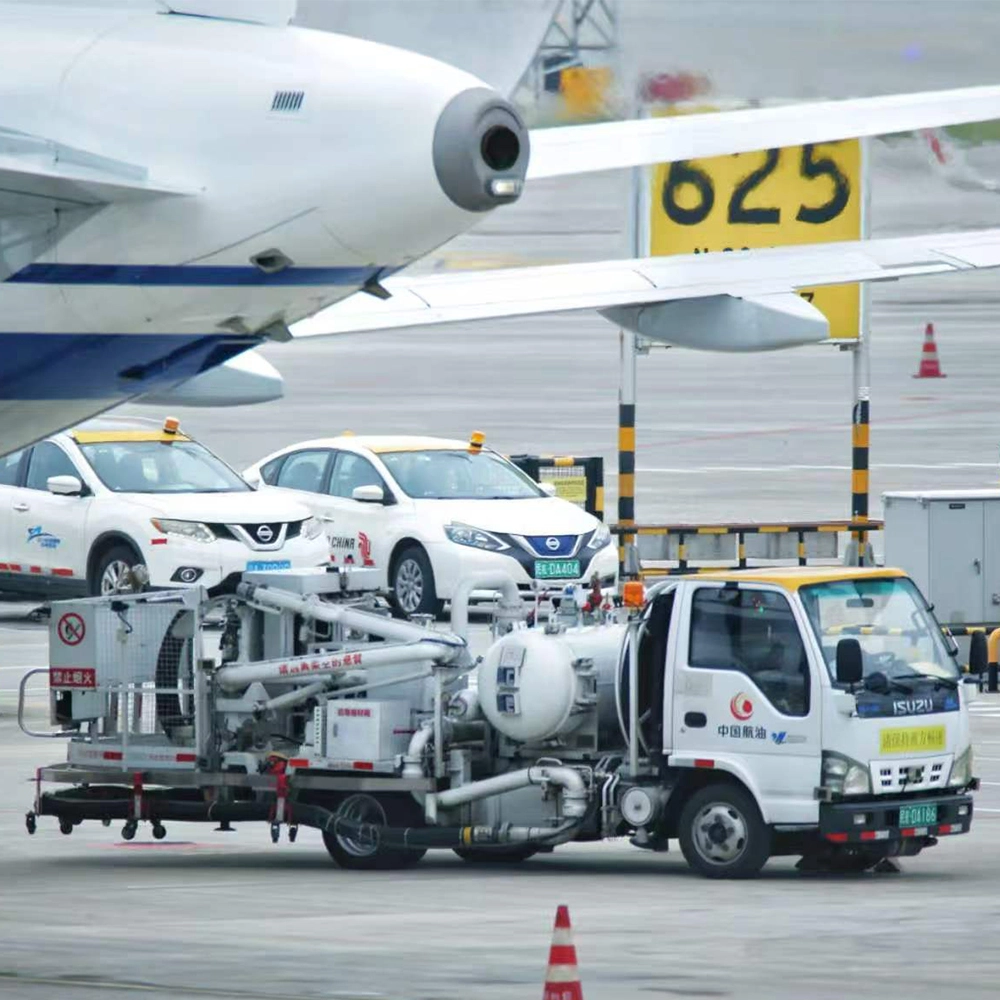
In civil aviation ground support infrastructure, mobile fluid-handling assets—specifically aircraft refuelling trucks, hydrant dispensers, and fuel bowsers—operate under the industry’s most unforgiving structural and environmental safety mandates. While fixed airport fuel farm pipelines rely on rigid carbon steel or stainless steel headers, the mobile chassis demands high-flexibility connections to decouple pump-induced high-frequency vibrations, damp heavy hydraulic shocks from rapid underwing nozzle shutoffs, and accommodate structural twisting during tarmac maneuvers.
Historically, the ground support equipment (GSE) sector has maintained strict design standards for these flexible nodes to eliminate catastrophic fluid leakage and static discharge hazards.
When specifying or replacing a rubber expansion joint handling Jet A or Jet A-1 aviation turbine fuel on a refuelling manifold, engineering approval requires a strict verification checklist balancing chemical compatibility, metallurgical dimensions, and static dissipation parameters.
Chemical and Fluid Dynamics Matrix: Combating Crystalline Contamination and Volumetric Swelling
Aviation fuels, primarily Jet A and Jet A-1, consist of sophisticated hydrocarbon matrices with strict limits on particulate and chemical purity. Deploying an uncertified or generic commercial elastomer in these lines risks fuel contamination and catastrophic engine failure downstream.
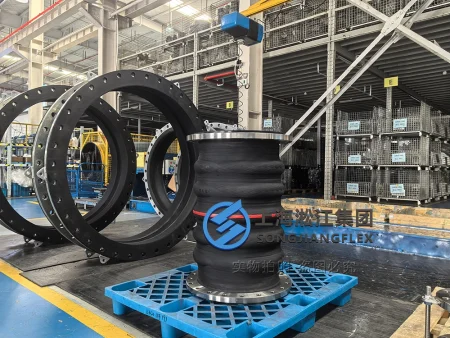
An engineering-grade aviation fuel rubber expansion joint requires a dual-compound architecture to handle concurrent internal and external threats:
- Aviation-Grade High-Acrylonitrile NBR Internal Liner: The fluid-facing inner tube must be synthesized from a specialized Acrylonitrile Butadiene Rubber (NBR) matrix with elevated acrylonitrile content. This formulation ensures absolute volume stability and an exceptionally low extraction profile under continuous exposure to high-aromatic aviation kerosene. It prevents chemical leaching, structural softening, or polymer shredding, ensuring the refuelling medium passes through the pipeline with zero micro-particulate contamination.
Ozone-Resistant CR External Cover: The external jacket of the bellows faces aggressive atmospheric conditions, ultraviolet exposure on the tarmac, and localized splashes of hydraulic fluids or de-icing chemicals. Utilizing a robust Chloroprene (CR) rubber outer layer prevents environmental micro-cracking and ozone cracking, protecting the inner structural core of the joint.
Mechanical and Electrical Continuity Requirements under Suction and Discharge
Operating parameters on an aircraft refuelling truck pipe loop involve dynamic fluid delivery and transient vacuum cycles during fuel scavenging or pump priming. Even when working pressures remain moderate, transient surges require specific mechanical and electrical configurations:
1. High-Tenacity Textile Cord Reinforcement
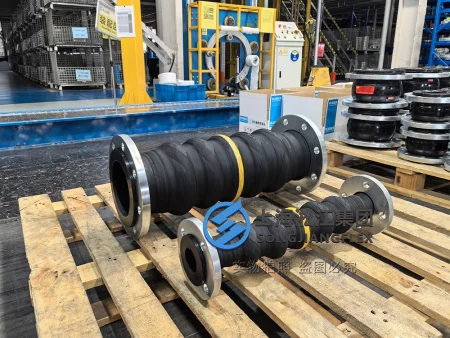
To maintain absolute geometric stability under dynamic flow velocities, the bellows core integrates multiple layers of high-tenacity synthetic textile cords. This internal matrix provides excellent pressure distribution and fatigue resistance, preventing radial ballooning or cross-sectional deformation during rapid emergency valve closures.
2. Certified Electrically Conductive Construction (Static Dissipation)
The most critical safety threshold in aviation refuelling is the total mitigation of electrostatic build-up. The high-velocity friction of hydrocarbon fuels moving through a pipeline generates massive static charges.
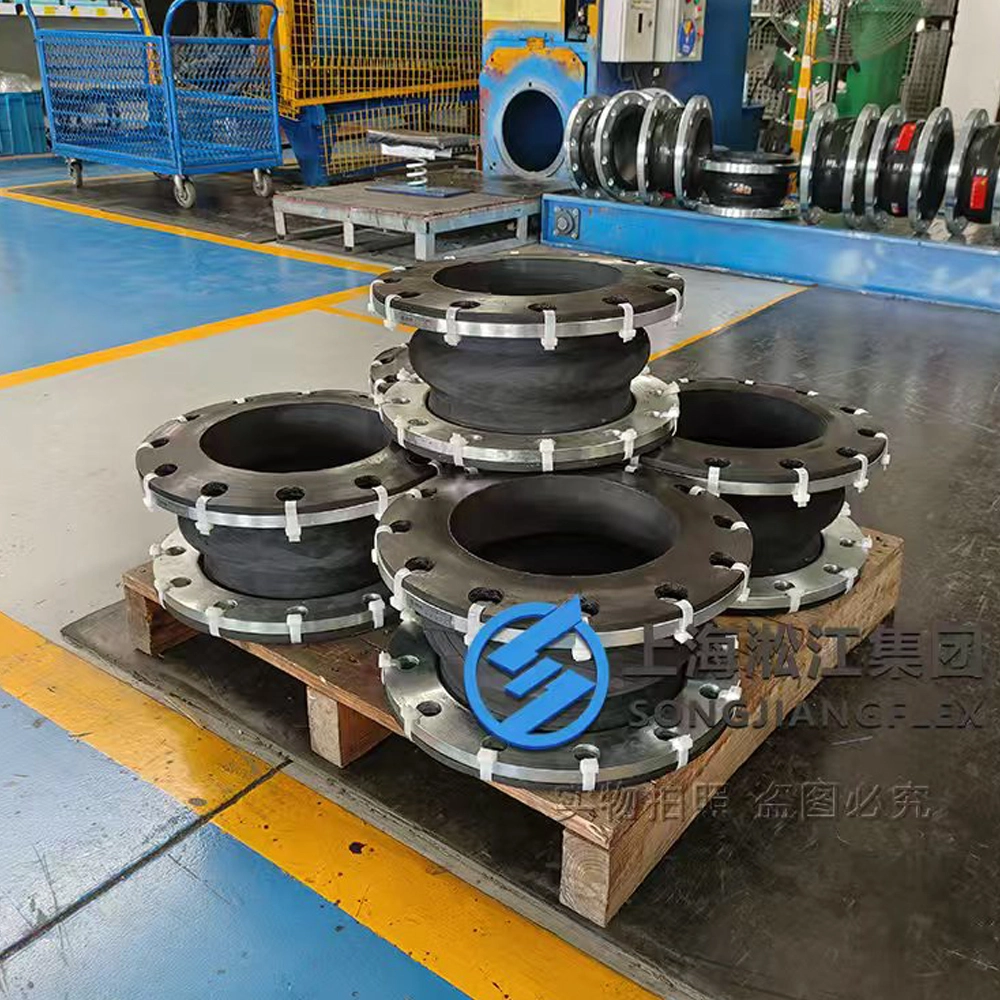
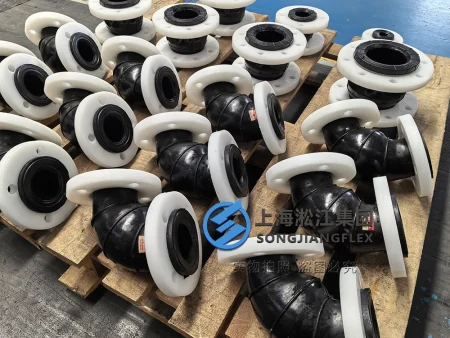
To eliminate the risk of catastrophic electrostatic arcing, the entire rubber joint must be engineered with full electrically conductive construction. The rubber compounds are modified with conductive carbon-black networks to ensure a continuous low-resistance path. This structure bleeds off static charges across the flexible gap directly into the hot-dip galvanized or stainless steel ANSI/ASME B16.5 Class 150 flanges, anchoring the entire assembly to the truck’s primary grounding grid.
Standard Interchangeability and Drop-In Fleet Optimization
For fleet maintenance managers and GSE OEMs, implementing interchangeable rubber joints requires a zero-tolerance approach to dimensional deviations to ensure fast swap-outs during routine maintenance overhauls:
Dimensional Correspondence: The component must feature an exact nominal bore and face-to-face specification matching the original equipment design, enabling immediate on-site replacement without modifying the existing truck piping layout.
Flange Standardization: The backing rings must conform precisely to international standards, matching ANSI/ASME B16.5 Class 150 bolt circles found on standard aircraft refuelling truck manifolds.
By utilizing high-purity NBR inner linings, ozone-inert CR outer jackets, and verified conductive carbon pathways, these specialized flexible piping connectors deliver total adherence to international aviation safety guidelines, securing extended operational life on the apron.