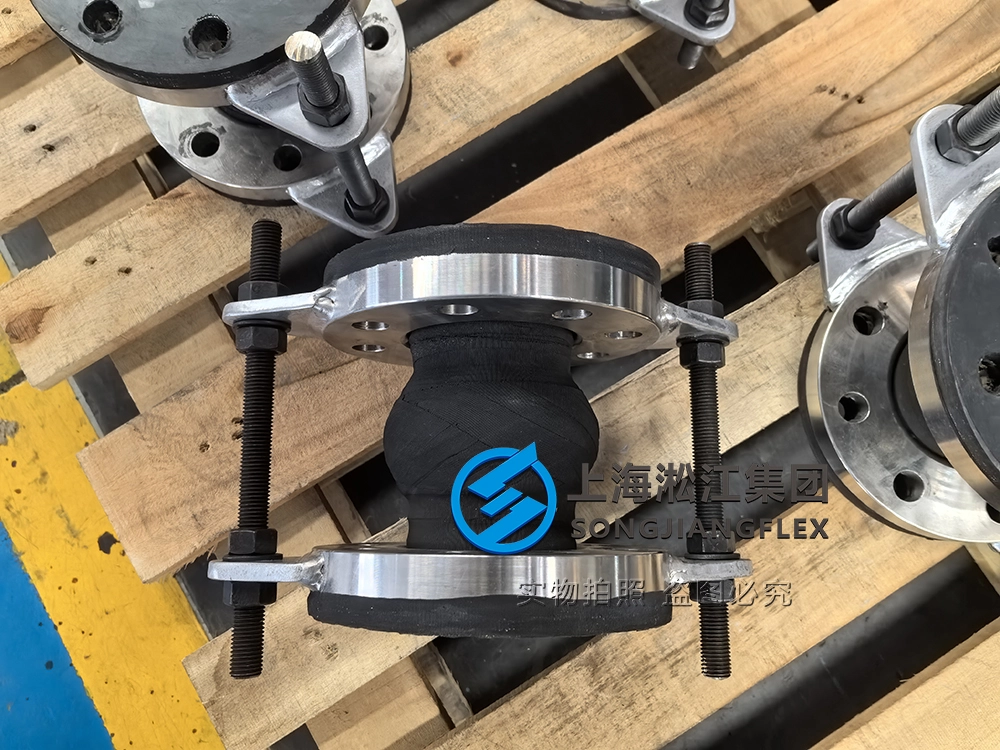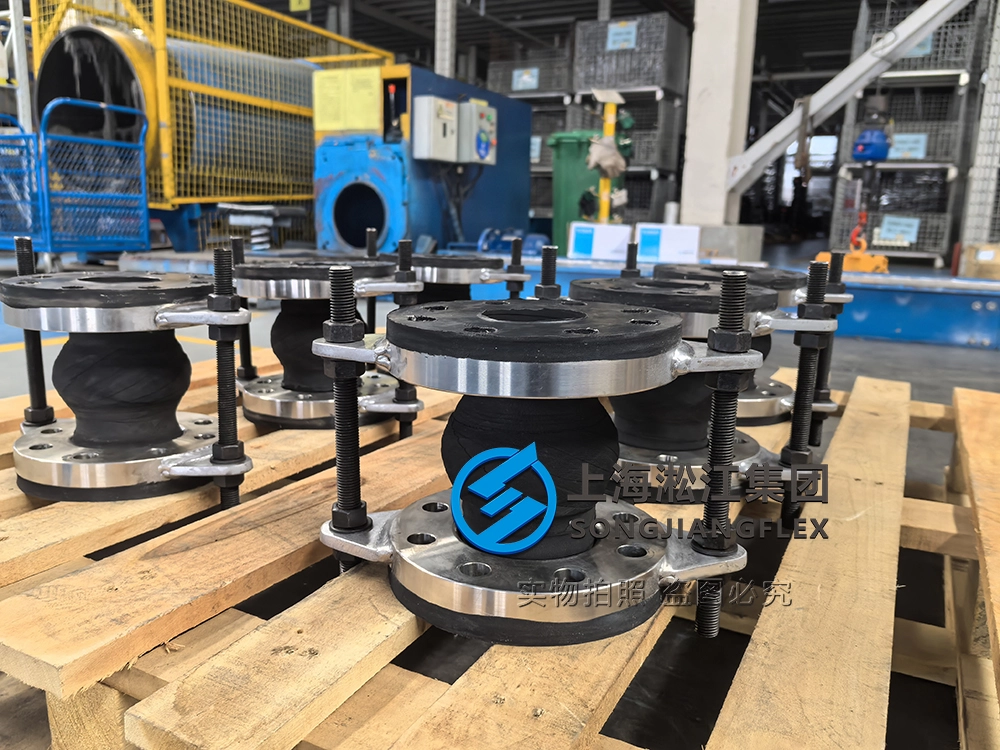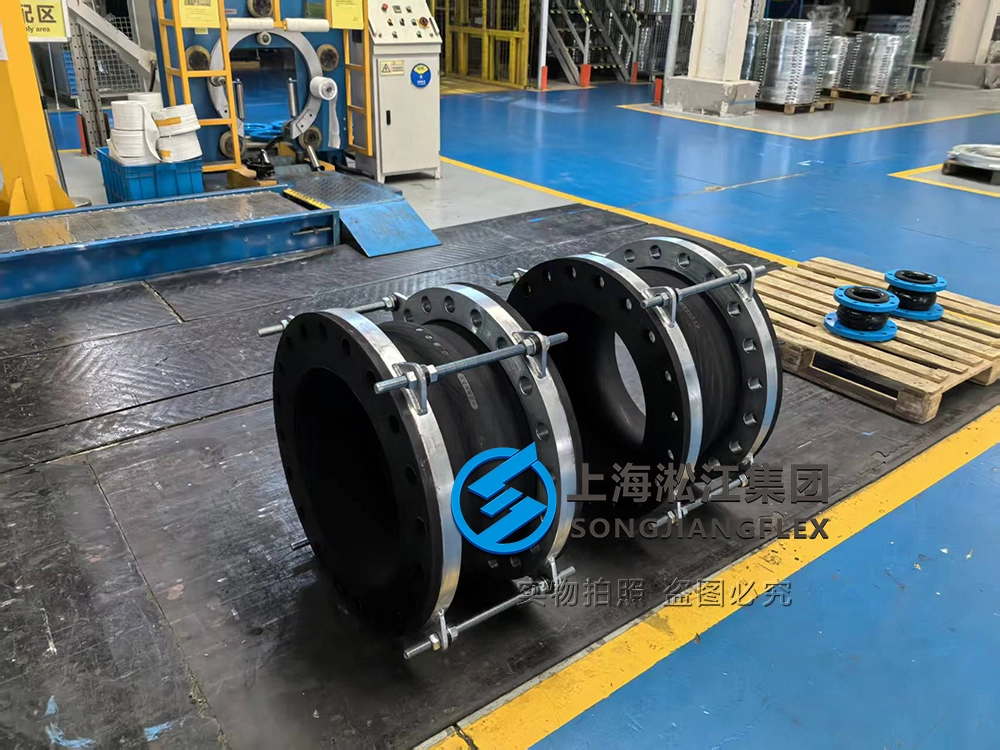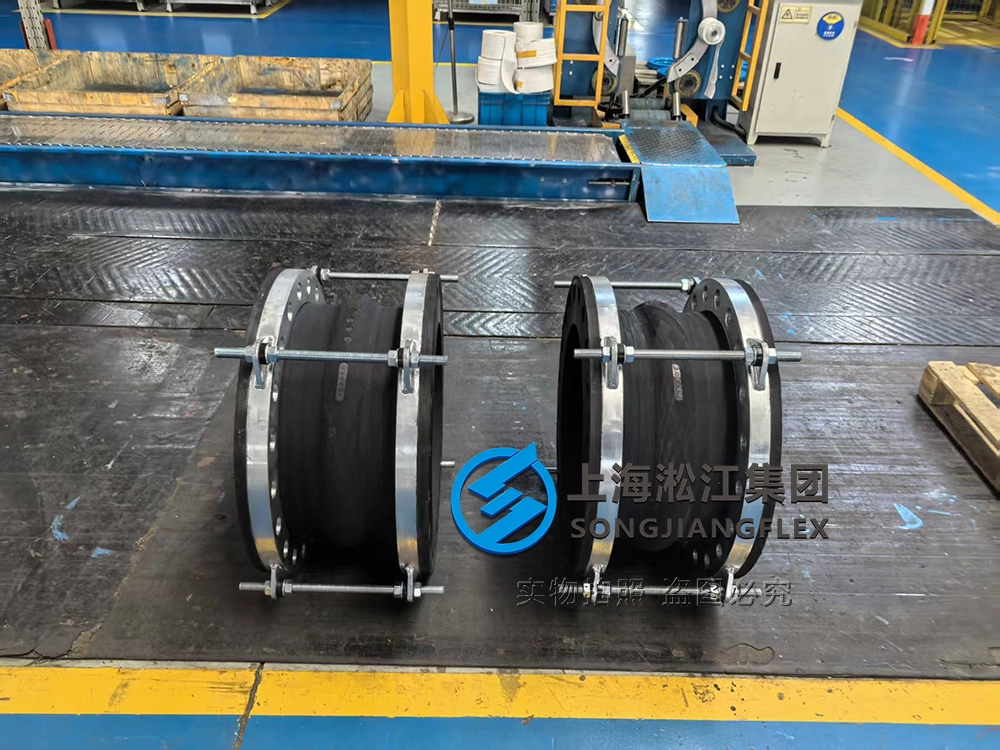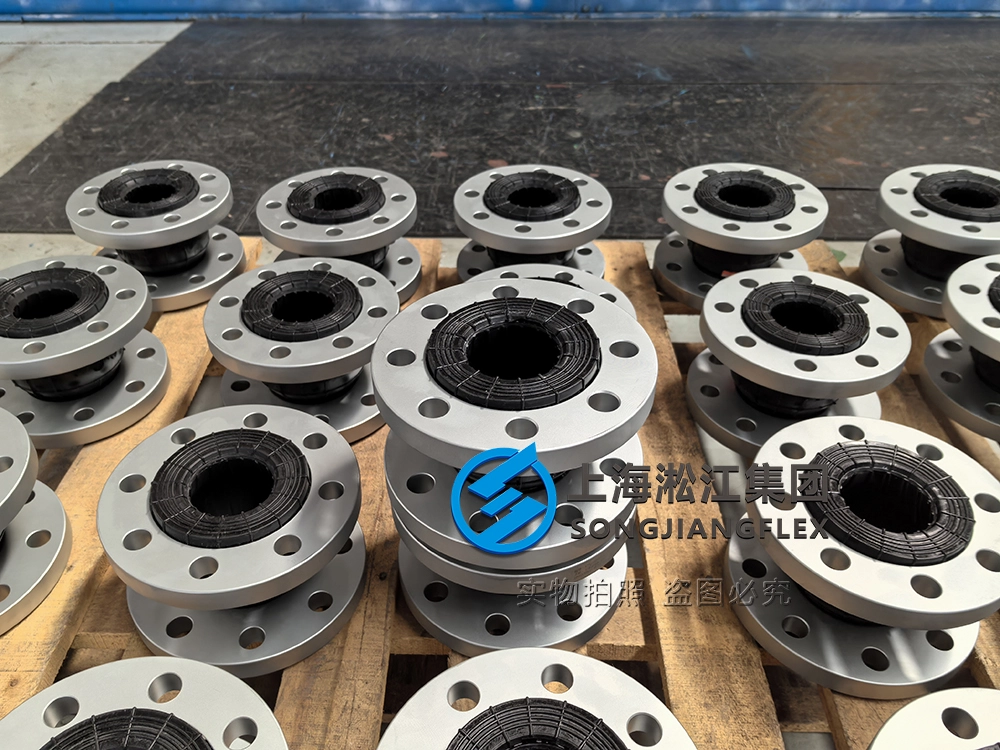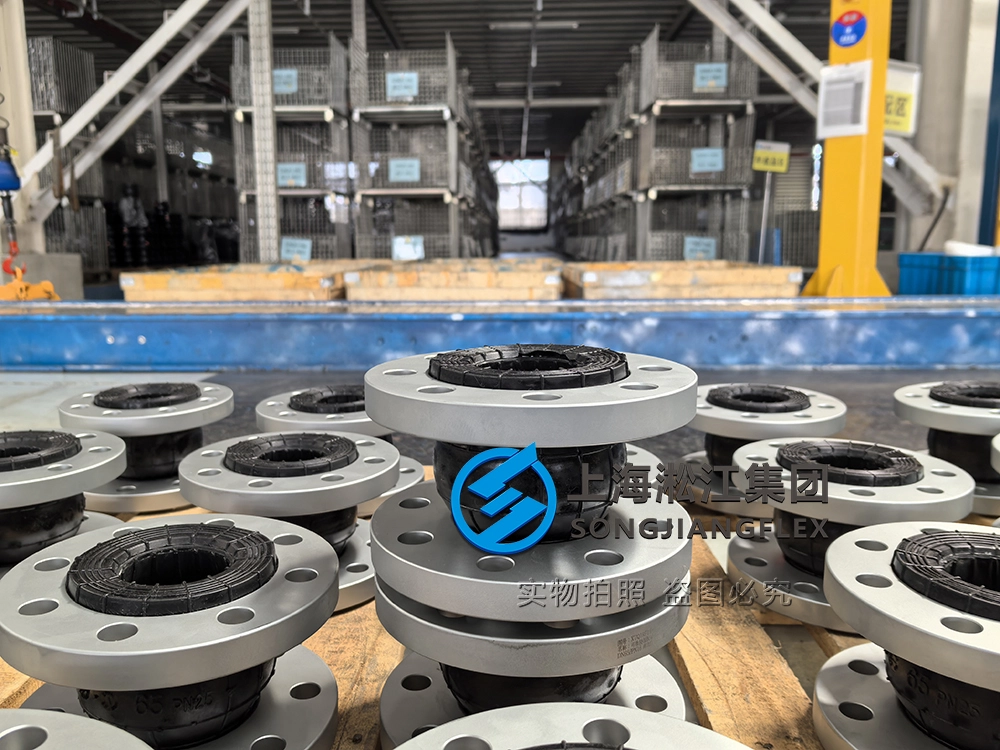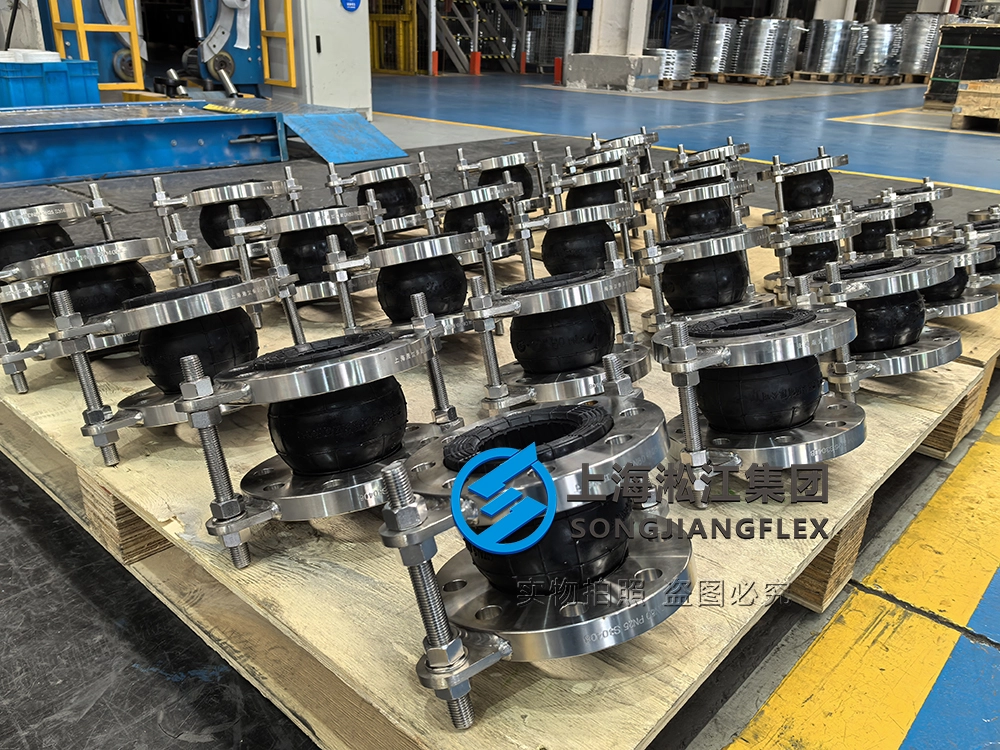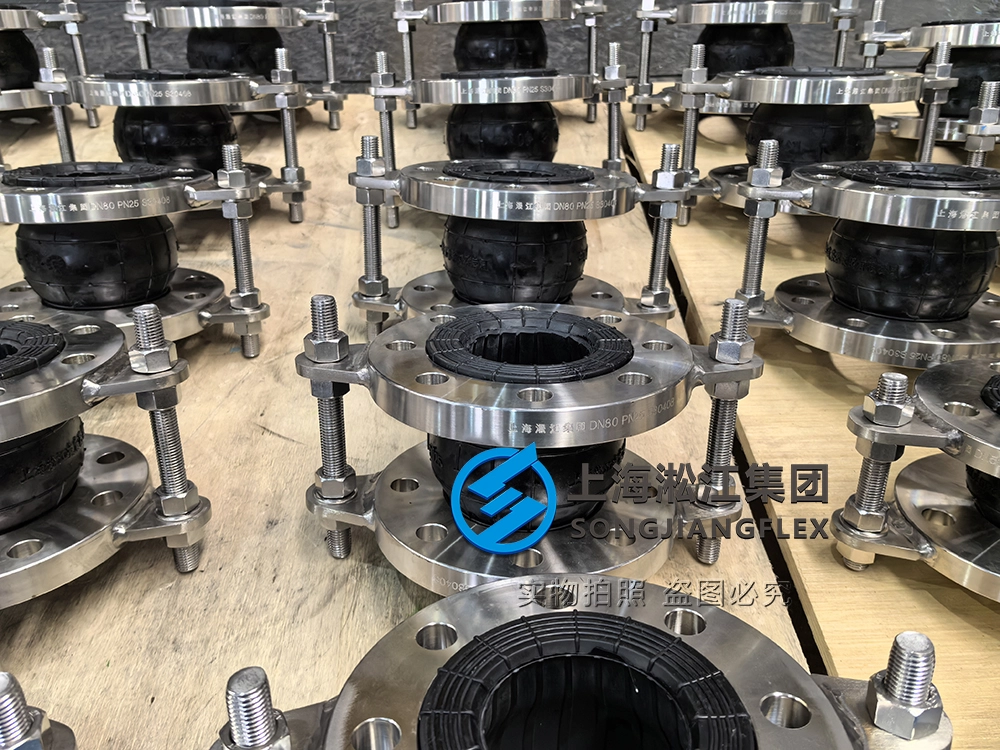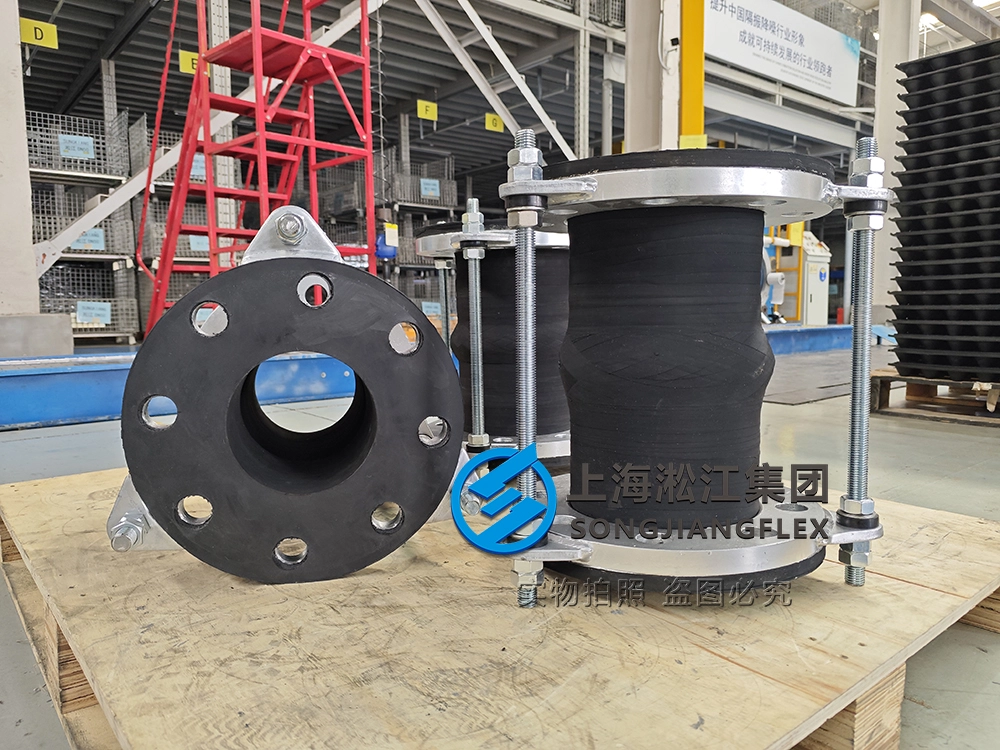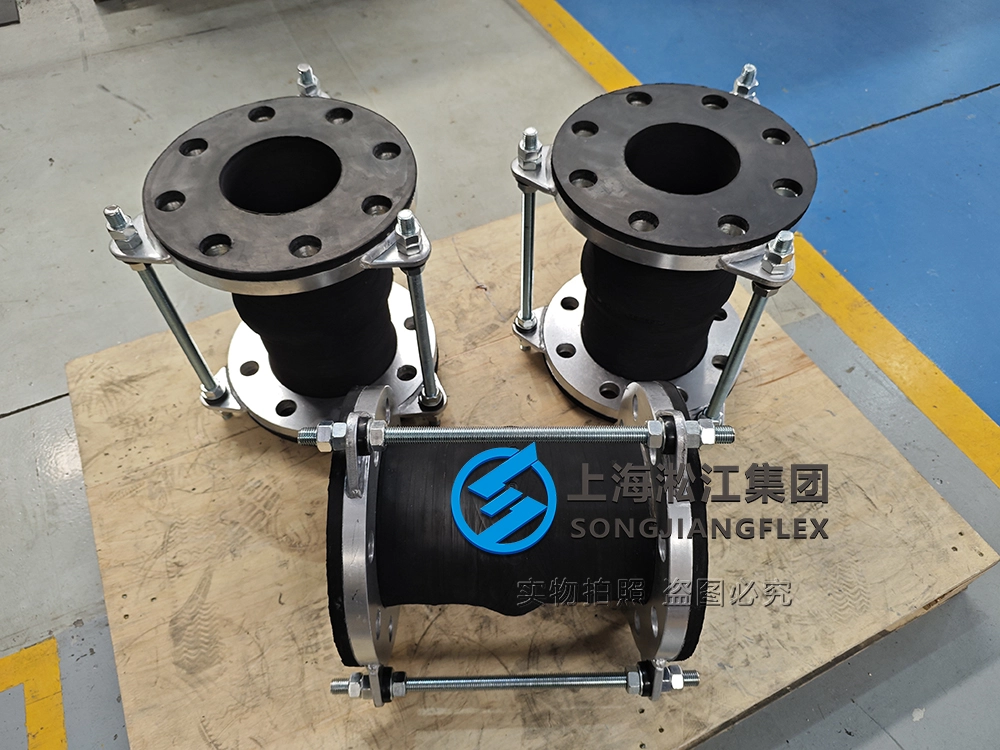
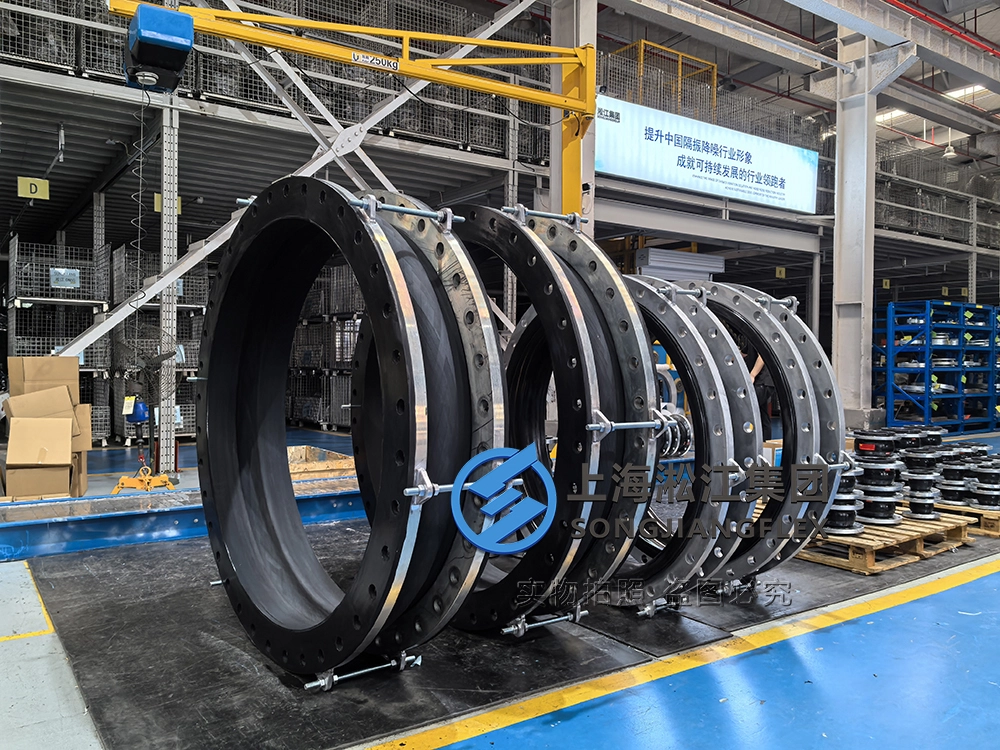
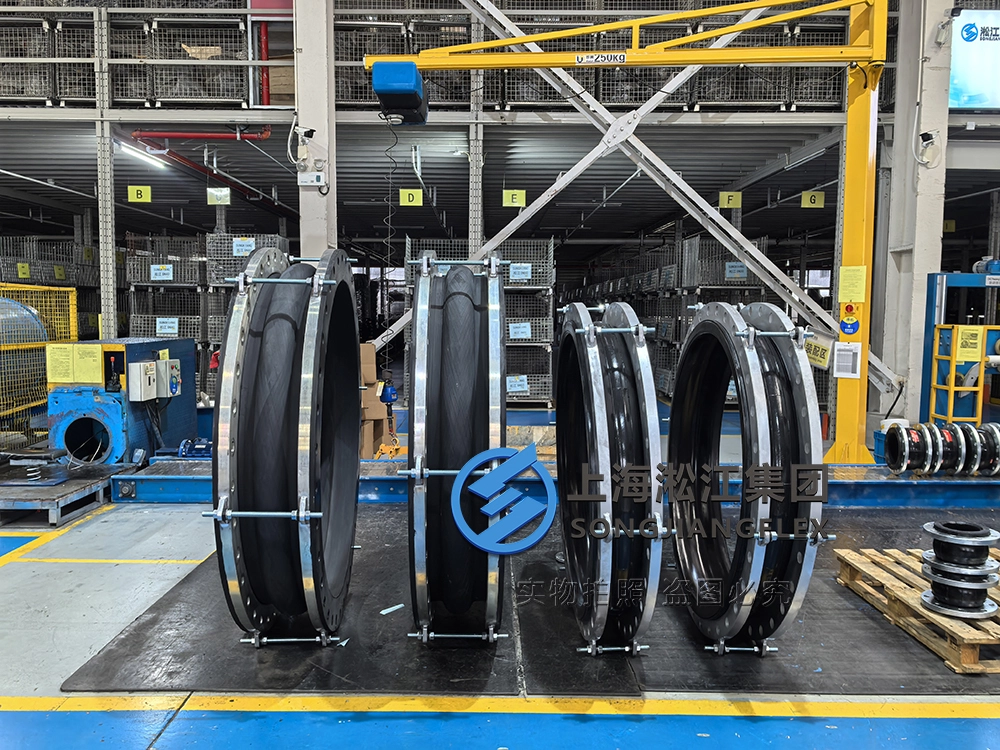
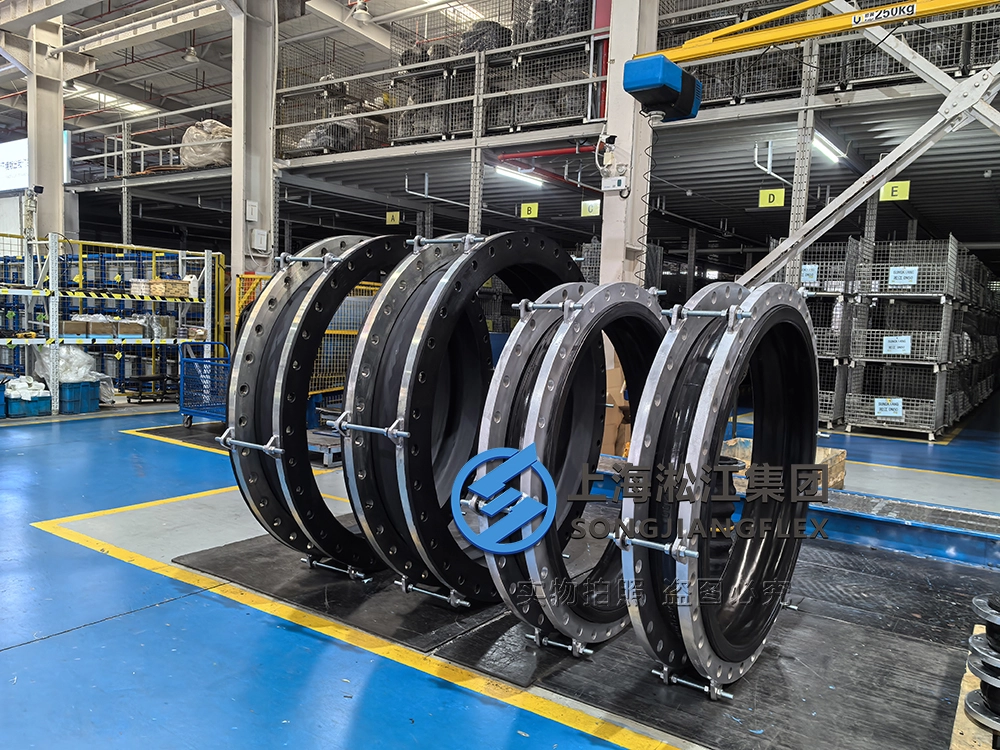
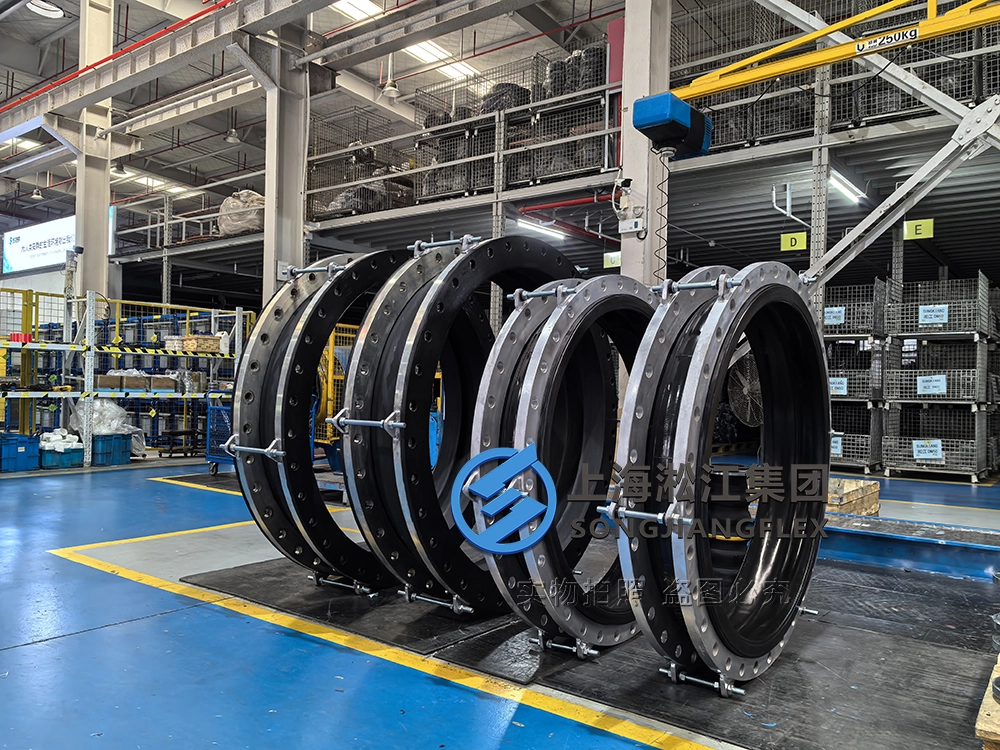
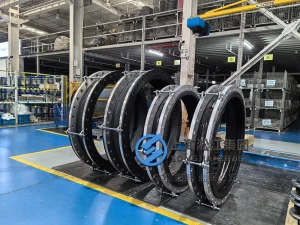
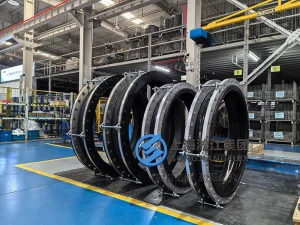
Hand-Built Wide-Arch Concentrated Seawater Rubber Flexible Joint | Full-Face Vulcanized Flange Layout with Heavy-Duty Welded Gusset Tie Rods
Product Overview
This heavy-duty DN1400 (56-inch) hand-built rubber expansion joint is precision-configured for utility-scale seawater desalination plant lines, coastal power cooling networks, and industrial brine headers experiencing severe pressure thrust. Featuring a compact 350mm face-to-face dimension and an optimized single wide-arch geometry, this multi-ply expansion bellow delivers premium vibration isolation and multi-axis displacement compensation under a 0.4Mpa working pressure rating. Operating flawlessly within a 0-50℃ temperature profile, this large-diameter rubber flexible joint acts as the permanent structural shock absorber for rigid intake manifolds.
The structural matrix of the rubber bellow is hand-built by layering high-tensile synthetic fiber cords at cross-plied angles inside an extra-thick, high-purity EPDM rubber matrix. This premium elastomer provides absolute immunity to high-concentration brine, chemical dosing agents, and atmospheric ozone cracking. To combat the severe corrosion of raw seawater, this unit features a full-face sealing layout. The continuous EPDM liner extends completely over the flange face and wraps around the carbon steel GB PN10 backing rings, vulcanizing the assembly into a single monolithic, gasketless component.
To suppress massive mechanical thrust and blind-end loads inherent to a DN1400 pipeline, the assembly incorporates an integrated 6-rod control unit. Six heavy-duty carbon steel limit rods are anchored via precision-welded gusset plates (lug ears) directly onto the flanges, distributing hydraulic forces evenly to prevent catastrophic pull-out. Beyond standard profiles, our engineering center provides full custom-to-drawing fabrication. We modify liner profiles and unique drilling dimensions directly from your CAD prints, ensuring premium B2B quality standards and exceptionally short lead times to eliminate civil project delays.
Key Features
- Monolithic Full-Face Vulcanized Flanges: EPDM liner wraps completely over the flange face, preventing fluid contact with carbon steel backing rings and eliminating edge leak paths.
- Heavy-Duty 6-Rod Control Assembly: Six carbon steel tie rods anchored to welded ear plates contain severe pressure thrust and prevent bellow over-extension under 0.4Mpa cycles.
- High-Displacement Wide-Arch Geometry: Single wide-arch architecture maximizes axial, lateral, and angular compensation within a compact 350mm face-to-face envelope.
- Chemical-Inert High-Purity EPDM Liner: Premium elastomeric matrix resists aggressive chemical degradation from concentrated brine, salt crystallizations, and chlorine stabilizers.
- 360° Stress-Free Swivel Backing Rings: Carbon steel flanges rotate freely before bolting, eliminating installation torque pre-stress on the large-diameter rubber core.
- High-Tensile Fabric Reinforcement Infrastructure: Multi-ply high-tensile synthetic fiber cord skeleton ensures uniform pressure distribution and prevents structural ballooning.
Applications & Equipment
- Seawater Desalination Brine Reject Lines: Corrosion-resistant soft connections handling high-velocity concentrated brine streams discharged from reverse osmosis (RO) membrane arrays.
- Coastal Power Plant Intake Circulating Lines: Large-diameter flexible links absorbing structural movement on primary water intake headers supplying main surface condensers.
- Municipal Marine Outfall Pipelines: Heavy-duty wide-arch expansion joint installations bridging onshore pumping facilities to offshore submarine discharge manifolds.
- Thermal Desalination Flash Chamber Feeds: Vacuum and pressure resilient EPDM rubber bellow modules connecting primary seawater brine heaters to flash distillation evaporation tanks.
FAQ
Frequently Asked Questions | DN1400 Seawater Rubber Bellow Engineering Guide
Q: Why is a full-face vulcanized sealing layout combined with a 6-rod welded control unit mandatory for a DN1400 seawater rubber expansion joint at 0.4Mpa?
A: Directing corrosive fluid through a large-diameter DN1400 piping system creates severe mechanical and chemical failure risks. Even at a modest 0.4Mpa working pressure, the structural cross-section of an 1400mm pipe experiences an immense pressure thrust that can distort rigid joints or break pump nozzles. Furthermore, concentrated seawater causes rapid corrosion on any exposed metallic surfaces. Our hand-built wide-arch rubber flexible joint completely resolves these dynamic hazards through three dedicated technical pillars:
- Total Galvanic Isolation via Full-Face Sealing: Traditional ring-face or small-rim joints leave the inner diameter of the metallic backing flange exposed to fluid tracking, resulting in crevice corrosion and pitting. Our full-face sealing design extends the continuous EPDM rubber liner over the flange face and around the bolt holes, vulcanizing it directly onto the carbon steel PN10 flange. This structural envelope isolates the backing rings from seawater and atmospheric salt spray, ensuring long-term structural integrity and a gasketless, leak-free seal.
- Balanced Thrust Suppression with Welded Gusset Lugs: A DN1400 line running at 0.4Mpa generates thousands of kilograms of axial force that tries to push the piping apart. Standard non-control configurations risk over-elongating the rubber bellows. Our system incorporates six high-tensile carbon steel tie rods anchored directly via heavy-duty welded ear plates. This layout restrains the joint’s movement within its safe elastomeric limits, absorbing sudden pressure shocks and preventing pull-out failure.
- Custom CAD Solutions with Streamlined Lead Times: Large-scale seawater intake structures and desalination skids often present non-standard face-to-face layouts or proprietary flange drilling patterns that standard components cannot accommodate. We deliver precise custom-to-drawing engineering to match your unique layout requirements. We combine rigid premium quality parameters with streamlined production to guarantee short lead times, preventing expensive plant downtime.