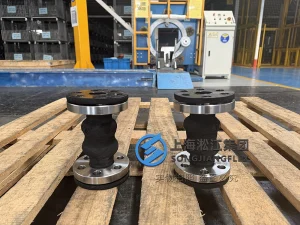
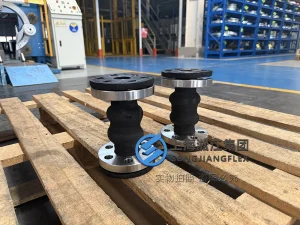
DN32 CR Rubber Flexible Joint with Aviation Kerosene-Resistant Liner and 304 Internal Support Rings
Product Overview
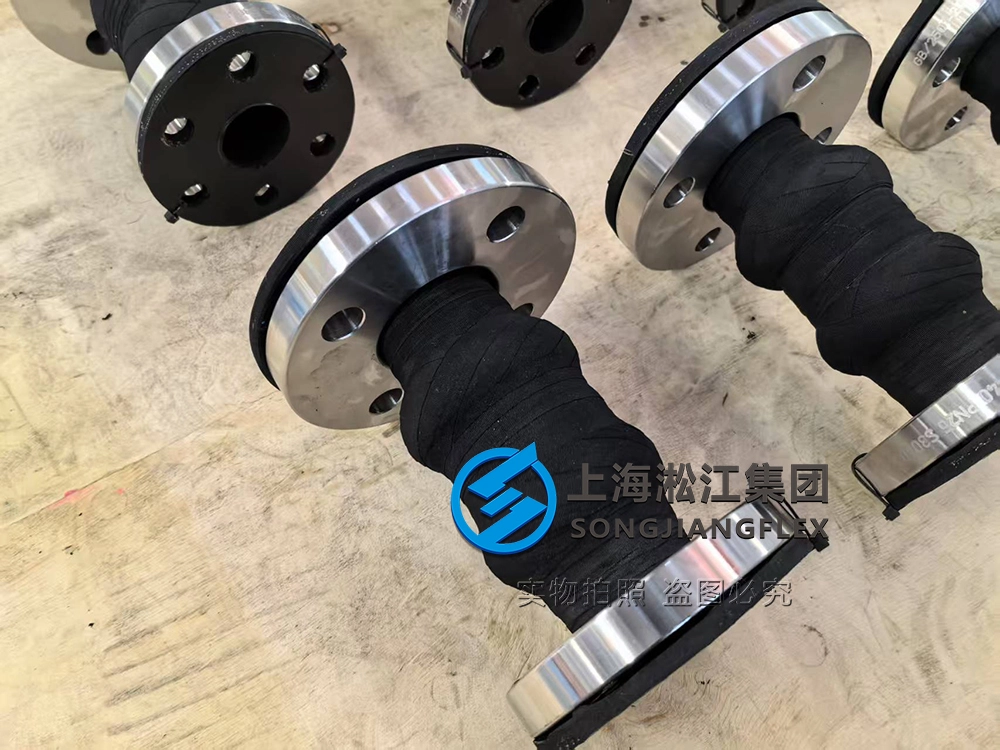
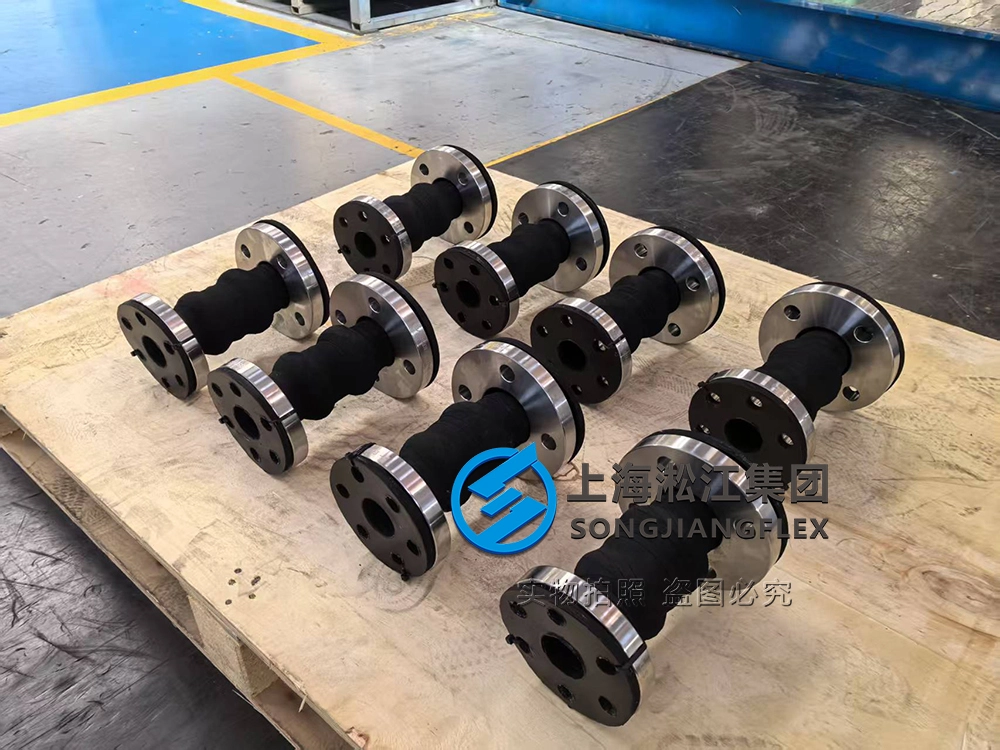
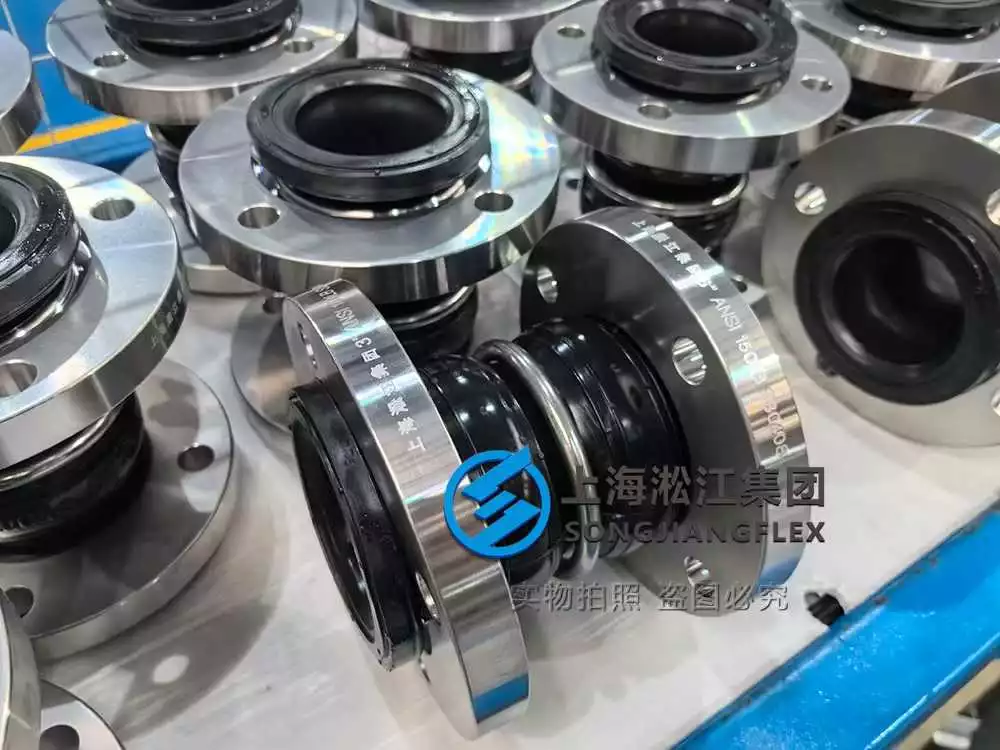
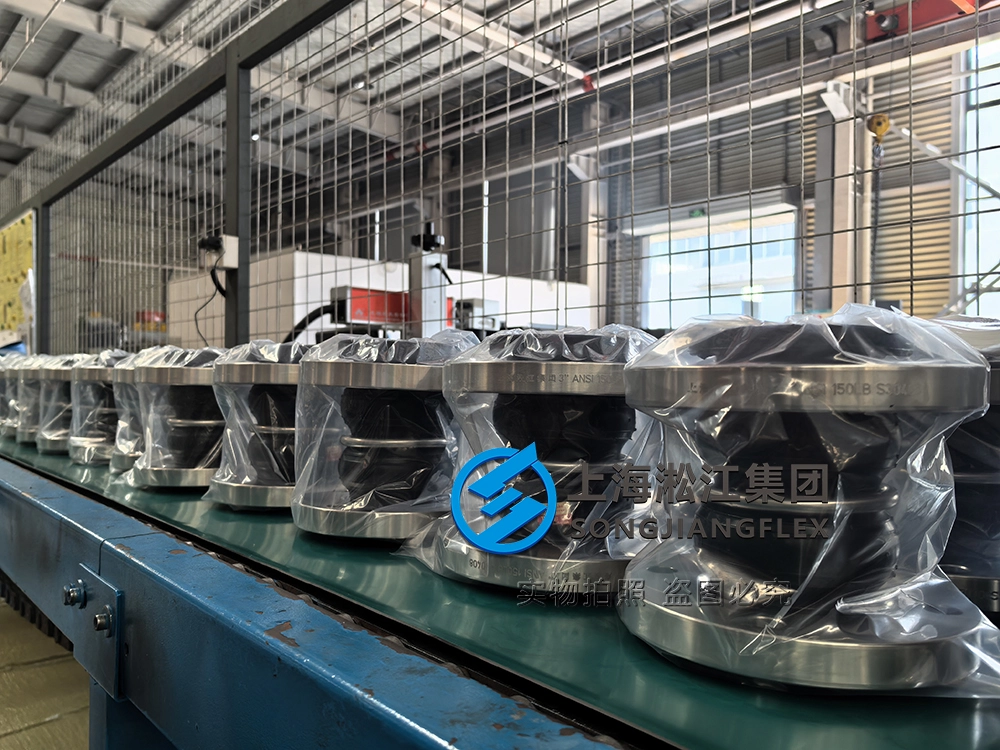
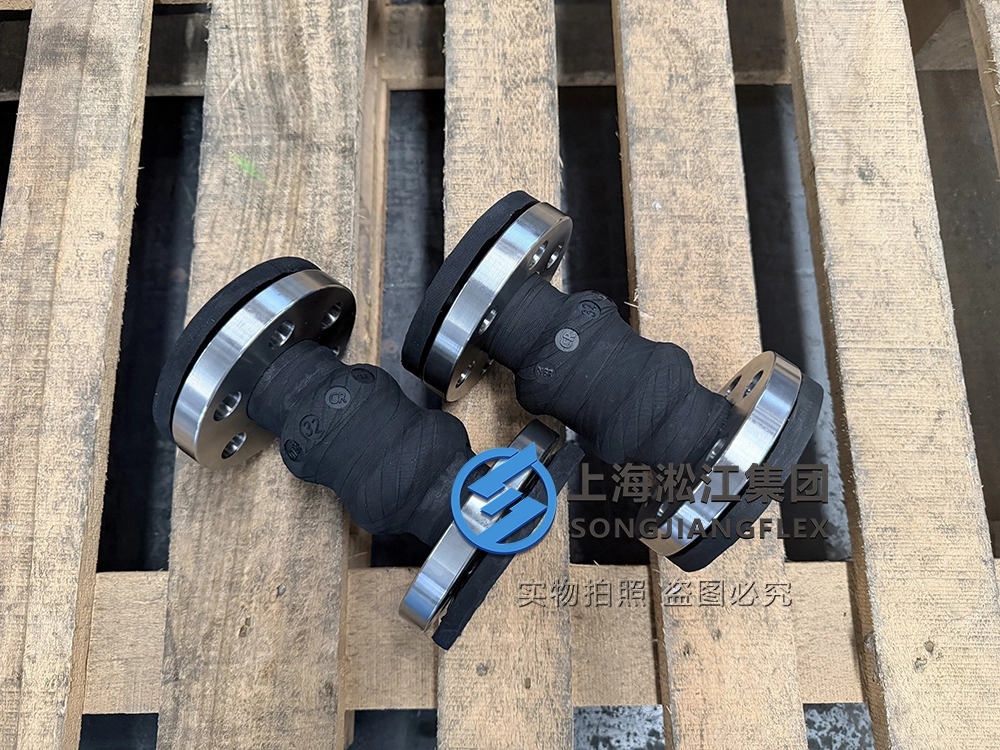
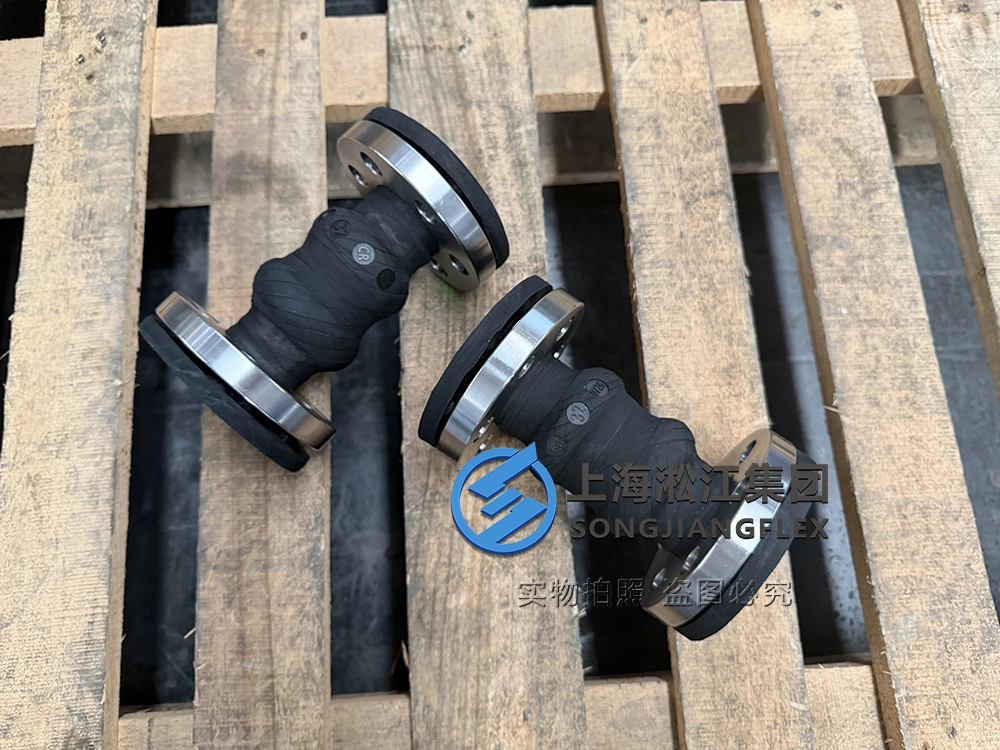
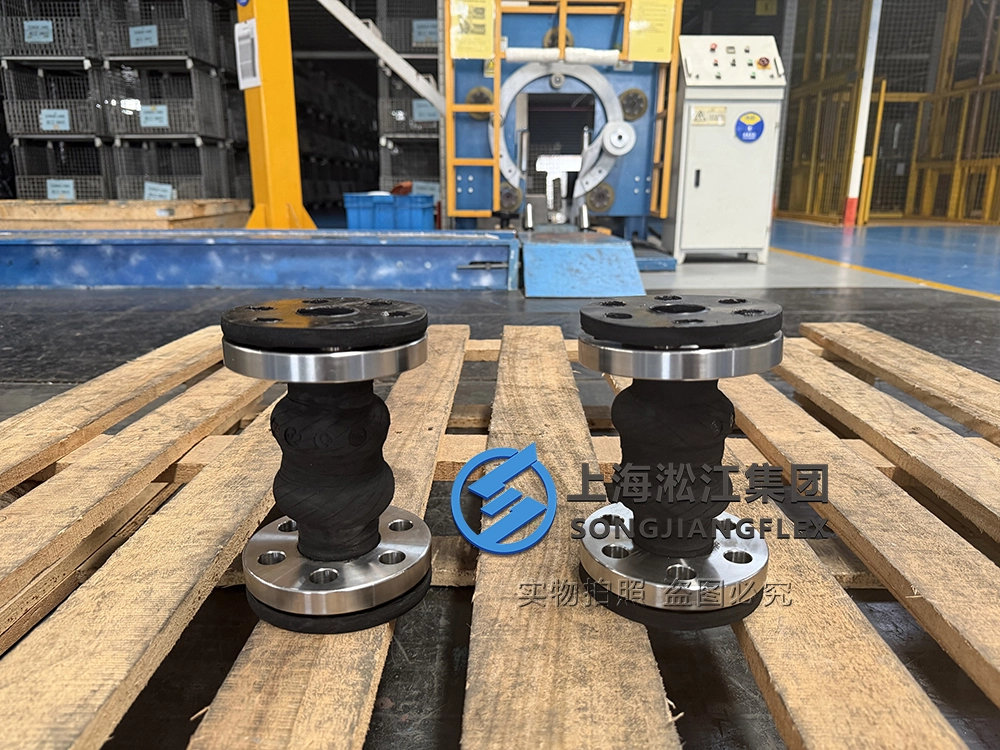
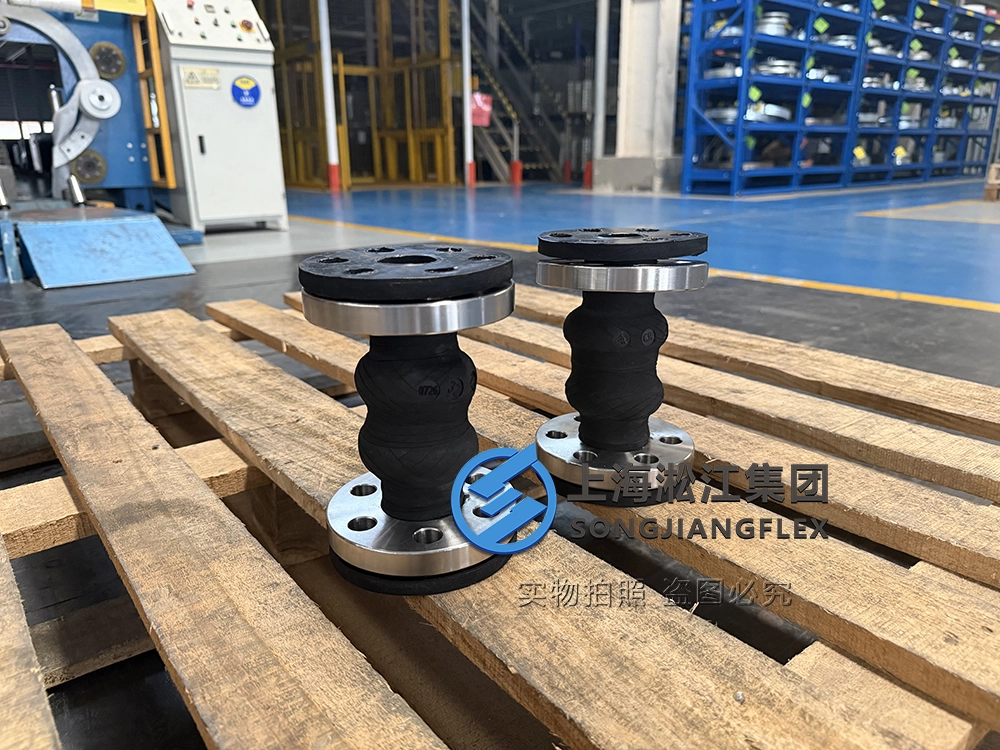
This DN32 hand-built double-arch rubber expansion joint is a flexible pipeline component with a 175mm laying length, integrated with full-face sealing 304 stainless steel flanges standard to CB/T46-2007 PN16.
The flat inner diameter profile is engineered to maintain uniform flow area through the dual convolutions, preventing fluid vortex formation and medium stagnation. Hand-built reinforcement plies wrap directly around structurally embedded 304 stainless steel rings, providing rigid circumferential resistance against radial forces.
This specific configuration solves cross-sectional carcass deformation, internal media accumulation, and vacuum collapse within transient negative pressure lines, while the full-face elastomeric interface eliminates crevice and galvanic corrosion at the flange mating face.
The component is rated for pipelines conveying aviation kerosene under a maximum continuous working pressure of 1.0MPa at a sustained process temperature of 60℃.
Operational compatibility is determined by the specialized synthetic inner rubber layer which resists hydrocarbon-induced swelling at 60℃, the embedded 304 structural rings that stabilize the bore during sudden negative pressure phases, and provide strict dimensional alignment with CB/T46-2007 PN16 piping specifications.
Key Features
- Dual-Compound Elastomer Architecture: Interior lining optimized for continuous immersion in aviation kerosene; exterior Chloroprene Rubber (CR) layer provides UV and ozone protection.
- Integrated Structural Vacuum Support: Solid 304 stainless steel rings are embedded directly into the convolutions to absorb external crushing forces during negative pressure cycles.
- Hand-Layered Carcass Reinforcement: Manual fabrication guarantees continuous wrapping of high-tensile fabric plies over the solid steel root wires, achieving uniform wall thickness across both arches.
- CB/T46-2007 Flange Compliance: Interconnecting dimensions, bolt circles, and hole numbers are machined strictly to CB/T46-2007 PN16 requirements using 304 stainless steel.
- Gasketless Full-Face Sealing: The integrated elastomeric flange face extends outward to the bolt holes, eliminating the need for independent piping gaskets.
Applications
- Aviation Kerosene Transfer Lines: Interconnecting segments of fuel loading, unloading, and distribution manifolds limited to 1.0MPa and 60℃ parameters.
- Marine Fuel Piping Networks: Installation within vessel engineering spaces and refueling systems requiring compliance with CB/T46-2007 PN16 marine flange criteria.
- Terminal Storage Manifolds: Applied at pump suction and discharge lines where local turbulence isolation and vacuum resistance are necessary.
Engineering FAQ
How do the embedded 304 stainless steel rings inside this hand-built double-arch joint prevent vacuum collapse under 1.0MPa transient negative pressures, and what are the operational limits?
- Radial Resistance Mechanism: The embedded solid 304 stainless steel rings function as structural circumferential stiffeners within the apex of each arch, mechanically transferring external atmospheric pressure away from the flexible elastomer carcass during vacuum transients to prevent flow path restriction or structural implosion.
- Hand-Built Bonding Integrity: Because this joint is hand-built, the continuous plies of fabric reinforcement are manually wrapped around the 304 rings to secure them in place, though interlaminar shear stress between the rigid steel and the flexible rubber matrix under rapid pressure cycling remains subject to actual operating conditions.
- Axial Displacement Constraints: The presence of these rigid metallic rings within the convolutions alters the overall spring rate and inherently limits the maximum allowable axial compression and extension compared to standard unreinforced dual-arch configurations; precise displacement limits should be verified against mechanical type-test data.
- Flow Geometry Stabilization: Unlike traditional open-convolution designs where negative pressure sucks the inner liner into the arch cavity, the combination of the flat inner diameter profile and the embedded rings maintains a constant cross-sectional area under 1.0MPa pressure fluctuations, preventing kerosene turbulence.
- Vacuum Rating Verification: While the 304 rings provide structural resistance against cross-sectional deformation, the exact negative pressure limit (absolute vacuum capability) is not quantified by the CB/T46-2007 flange standard alone and should be verified through prototype hydrostatic and vacuum testing before installation in suction lines.