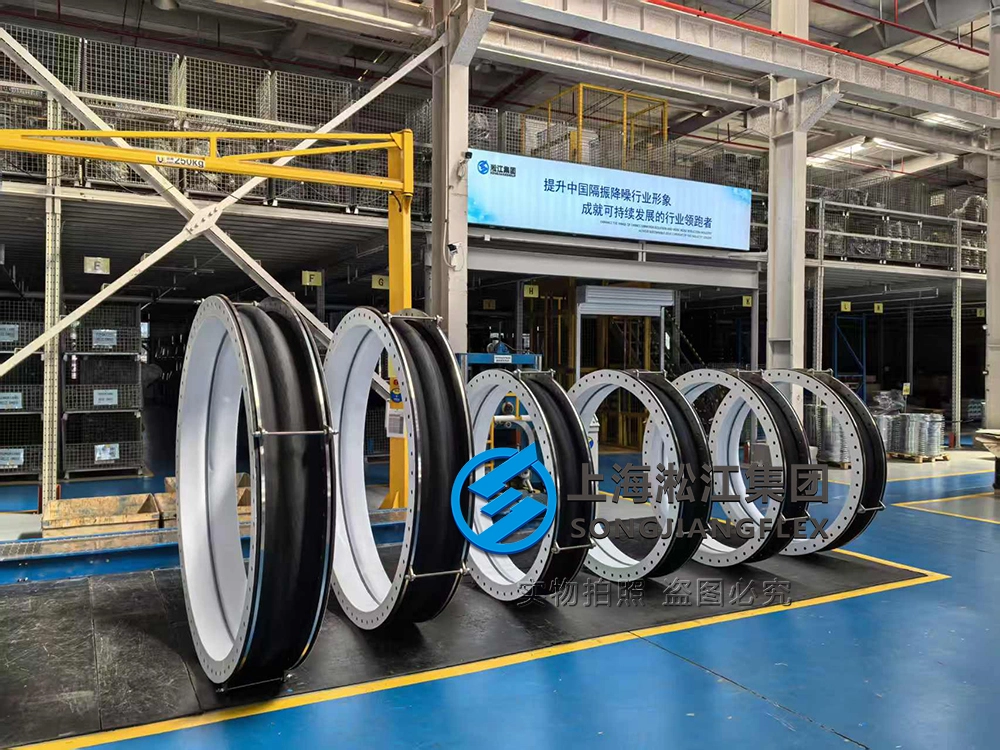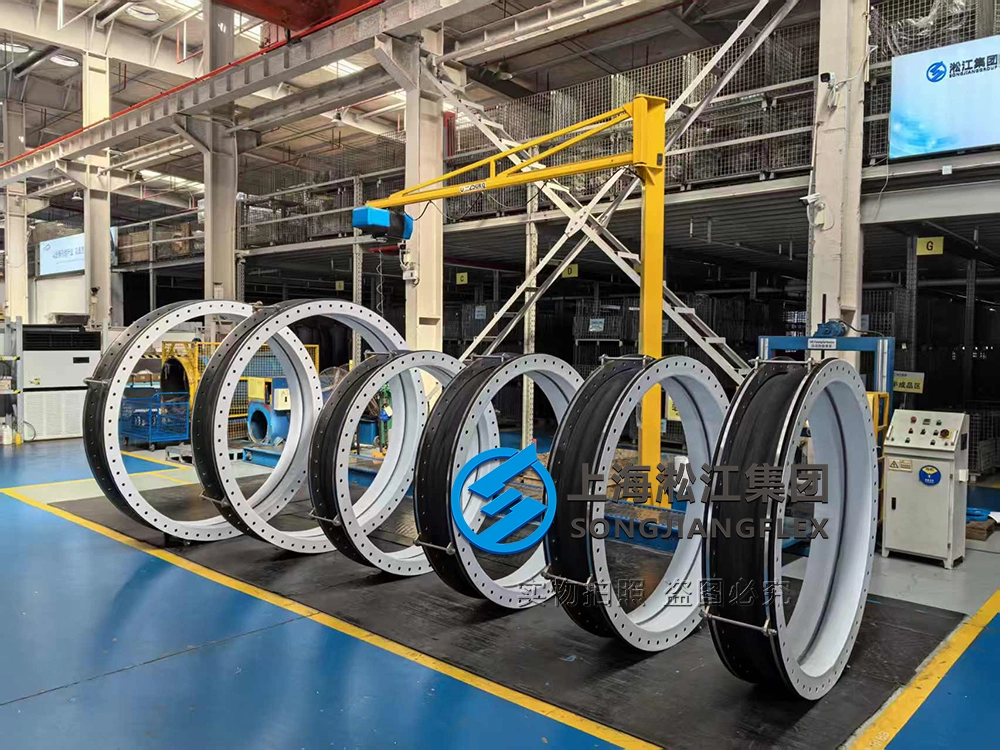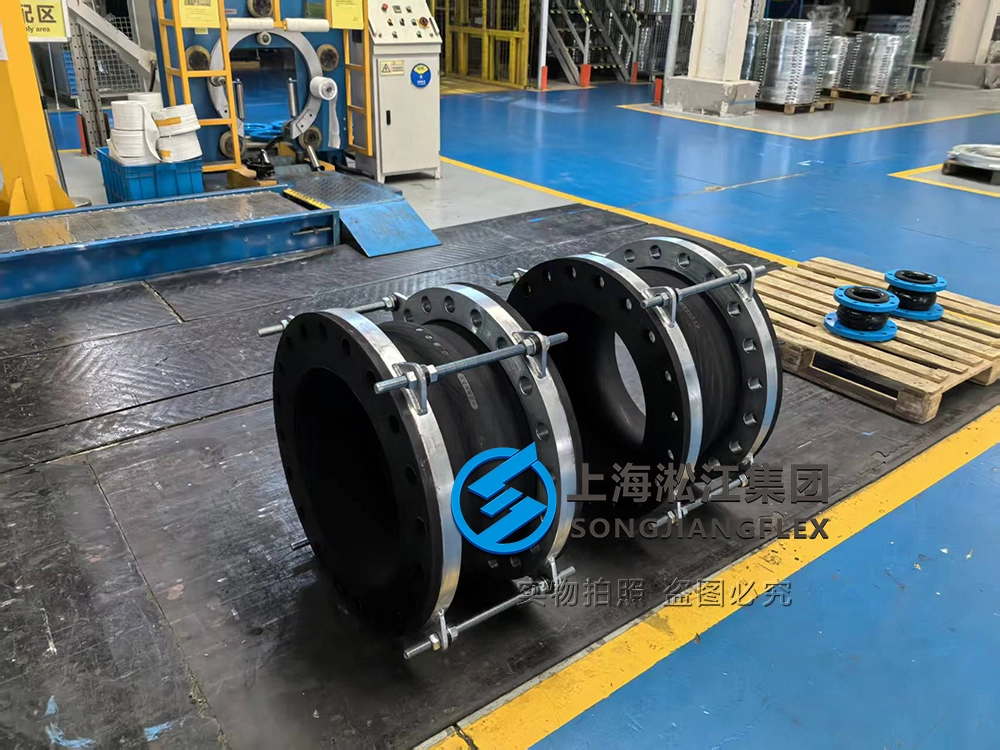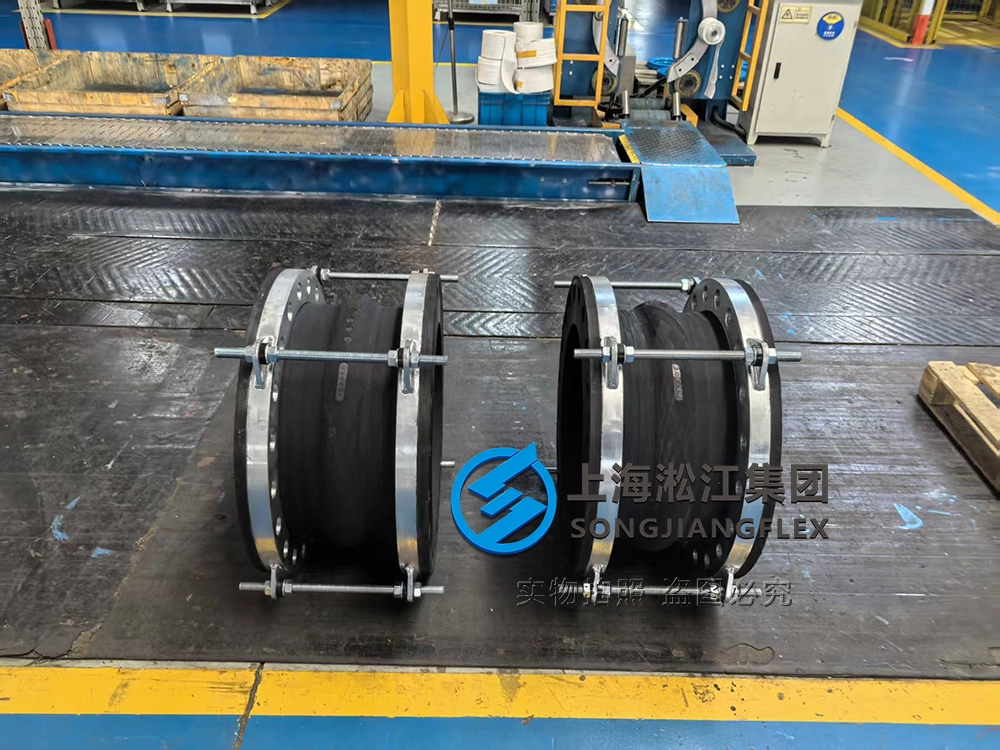
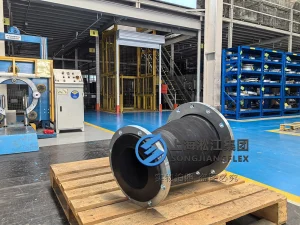
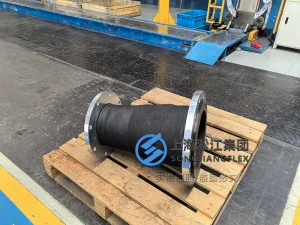
Zero-Arch Hand-Built Rubber Reducer Expansion Joint with Ring-Face Sealing for Mining Slurry Pipelines
Product Overview
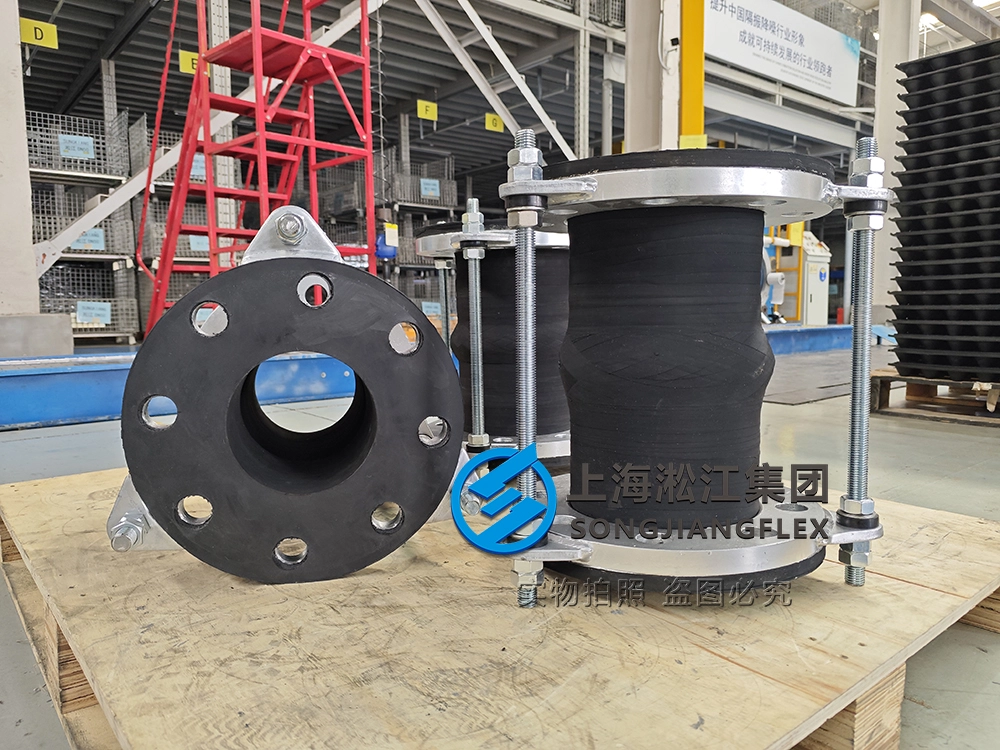
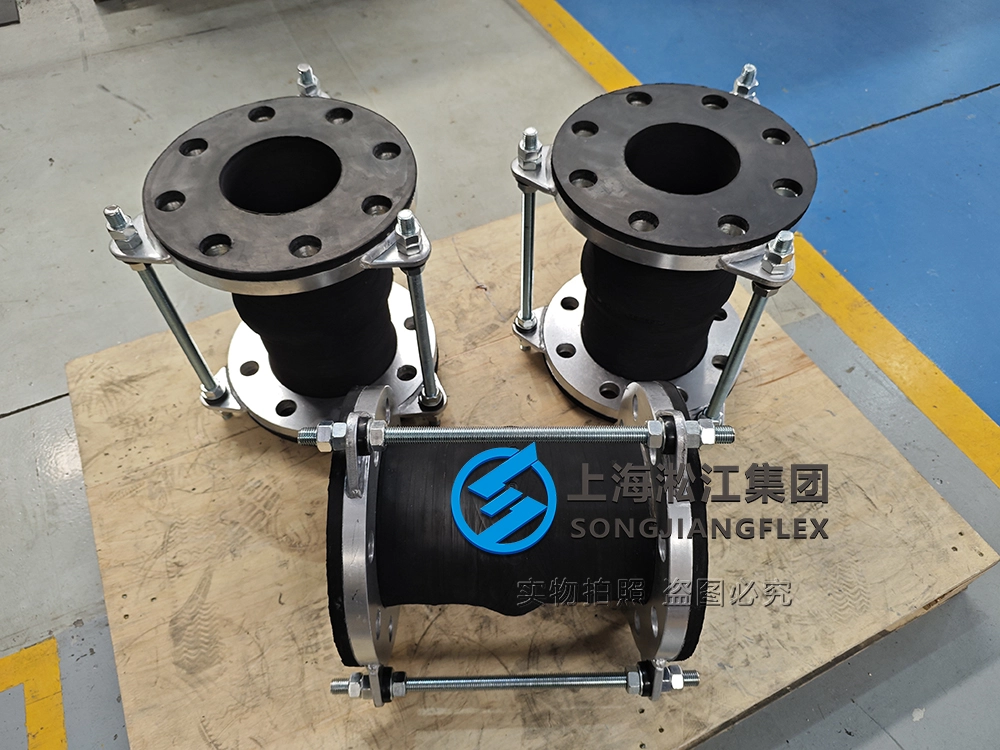
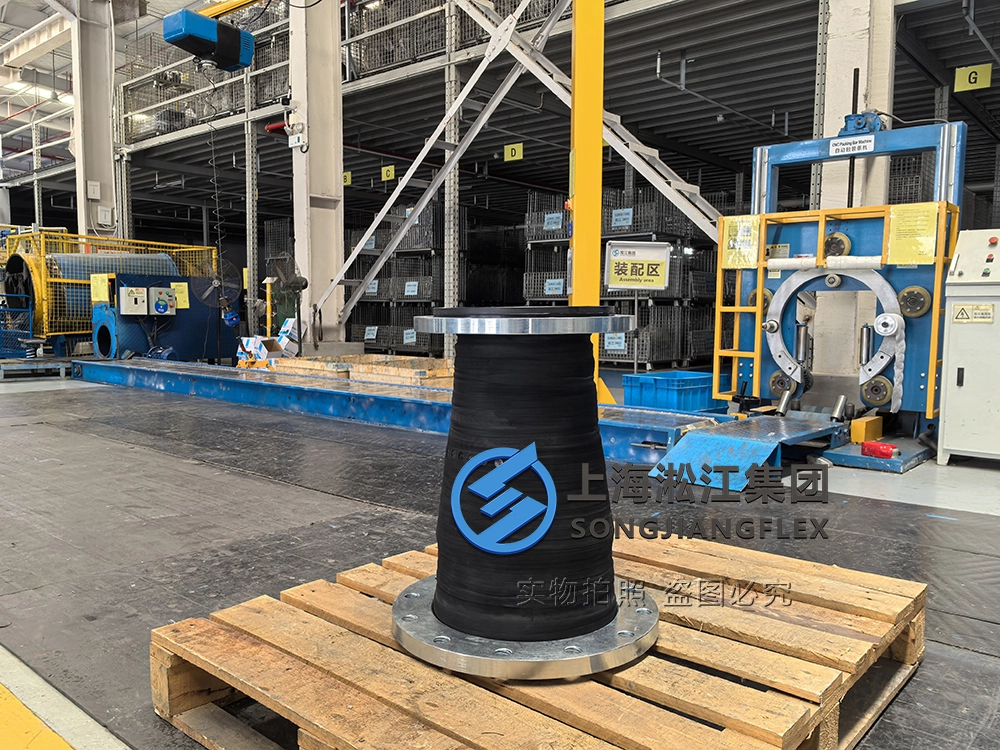
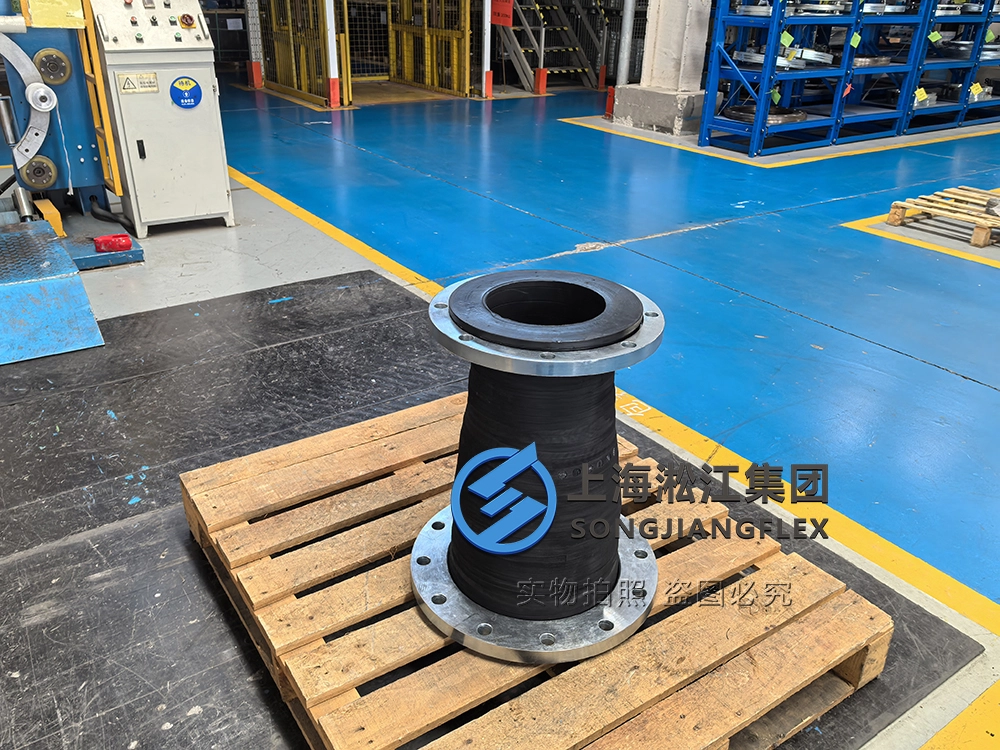
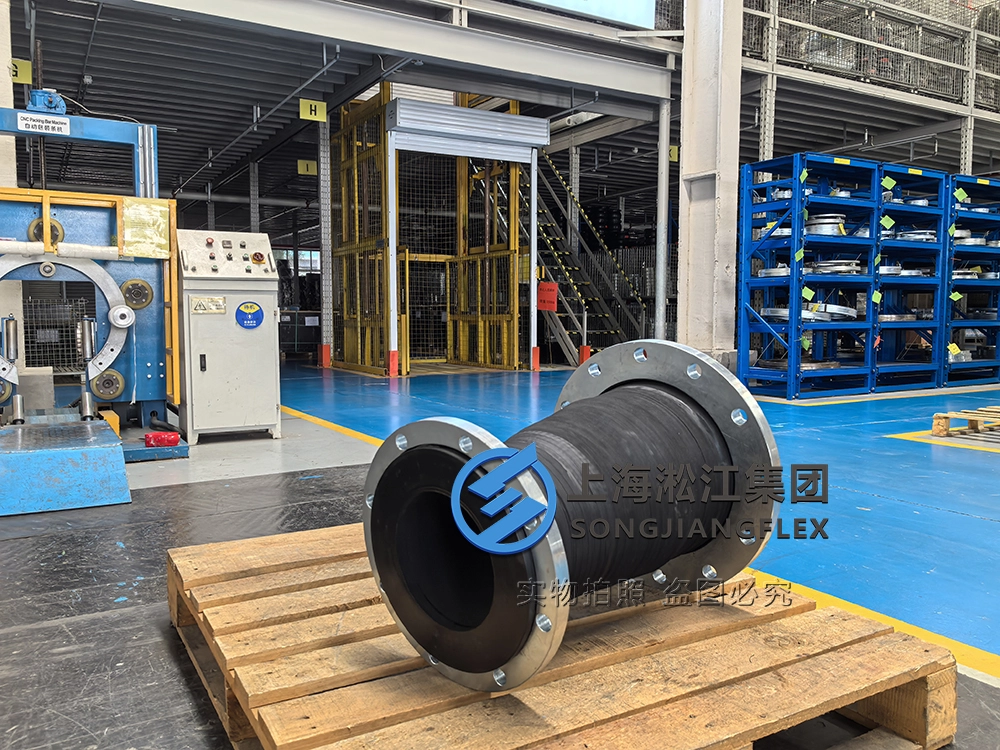
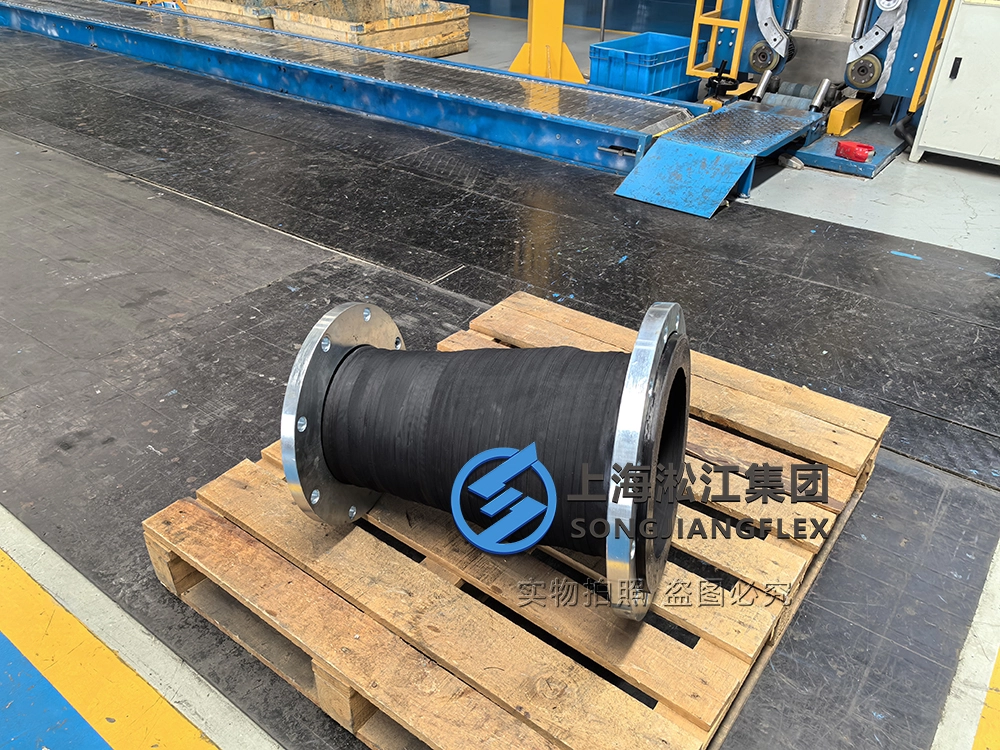
This product is a hand-built, concentric reducer rubber expansion joint designed to transition piping diameter from DN300 to DN200 over a laying length of 600mm.
Unlike conventional flexible joints that feature a pronounced convolution or arch, this expansion joint utilizes a zero-arch, straight-tapered internal wall configuration. This geometric profile prevents mineral solids and high-density particulates from settling or forming stagnant pockets within the bore. By eliminating internal cavities, the design eradicates the localized eddies and severe turbulent impingement that typically destroy standard single-arch bellows in high-velocity slurry systems.
The joint is engineered for ambient-temperature mineral processing and tailings disposal lines operating at a continuous working pressure of 1.0 MPa. The inlet side features a standard DN300 150LB drilling pattern, while the outlet side incorporates a custom, non-standard DN200 flange specification to mate directly with non-standard equipment interfaces or localized piping arrays.
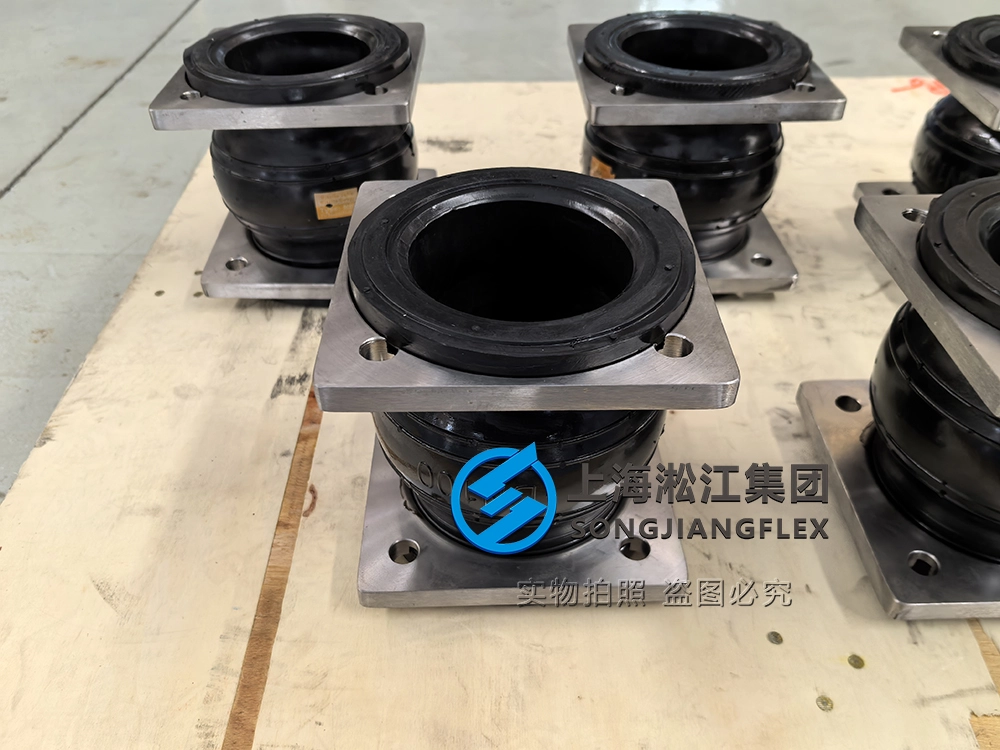
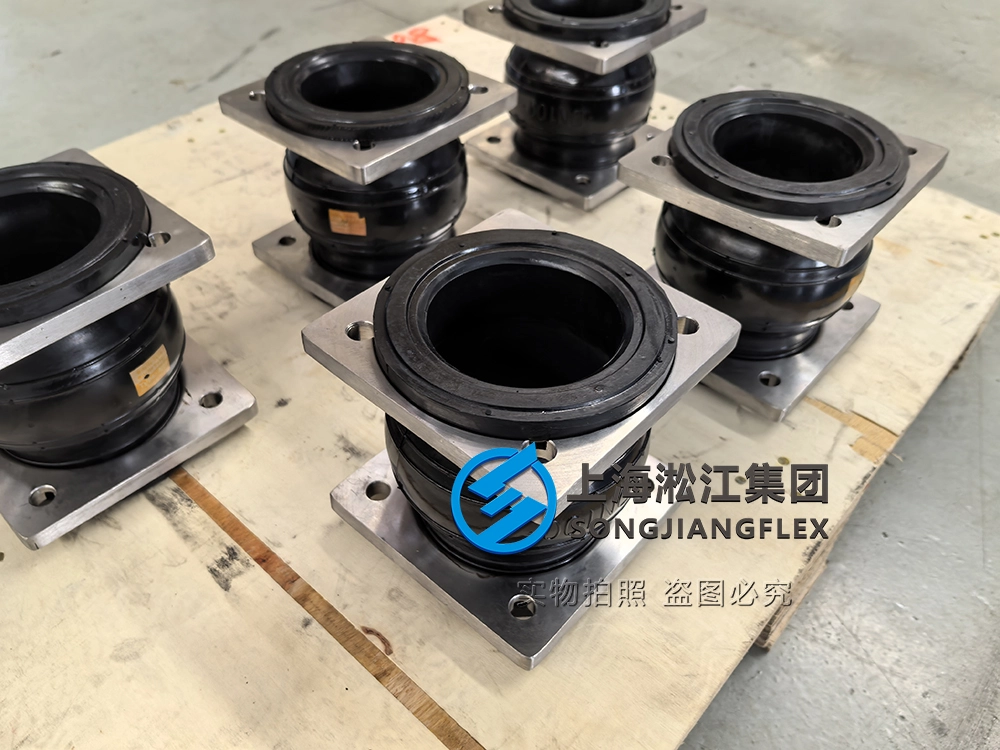
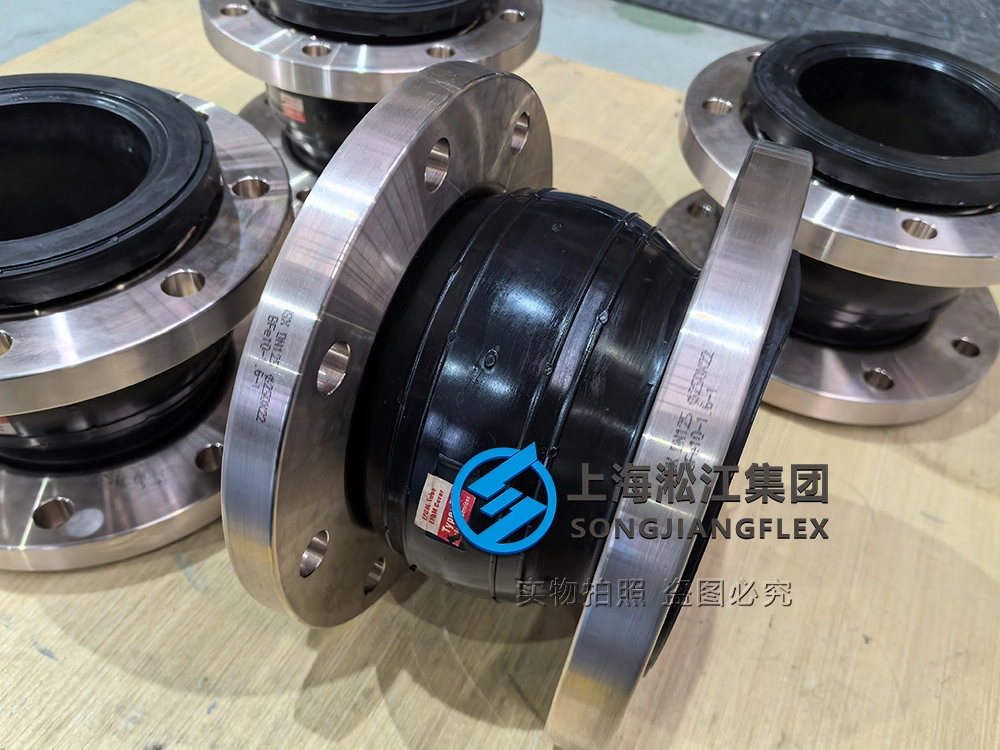
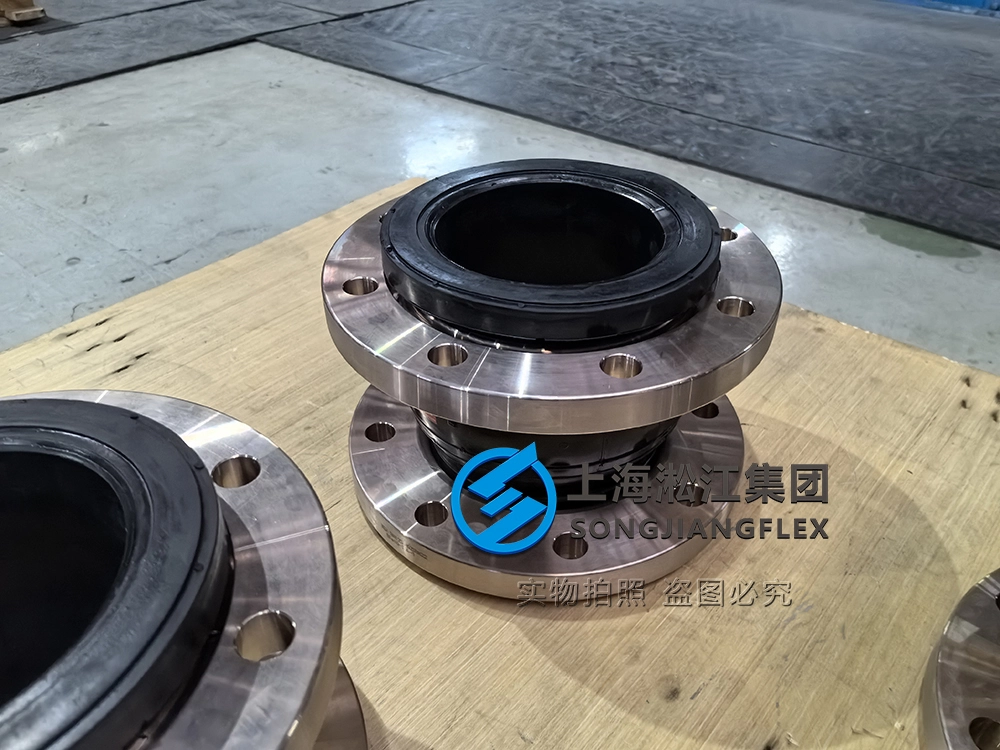
To withstand the heavy axial loads and hydraulic thrust inherent to a tapered high-pressure reduction line, the joint utilizes a compact ring-face sealing (small lip) configuration backed by loose, rotating flanges. The internal sealing lip contains an embedded solid ring core that physically interlocks with the flange recess under bolt torque. This structural lock prevents the rubber shoulder from slipping or pulling out of the flange assembly under a 1.0 MPa load, while the free-swivel carbon steel flanges allow for rapid bolt-hole alignment during field installation without subjecting the rubber body to harmful torsional stress.
Key Engineering Features
- Zero-Arch Smooth-Bore Architecture — Eliminates internal cavities to maintain uninterrupted laminar boundary layer flow and prevent media accumulation in high-solid suspension streams.
- Heavy-Gauge Abrasion-Resistant Rubber Liner — Deploys a thick internal layer formulated with dense elastomeric compounds to absorb constant particle impingement and sliding abrasion from mineral slurries.
- Reinforced Ring-Face Lip with Embedded Anchor Core — Concentrates sealing force on a compact surface area, utilizing an internal solid core to mechanically anchor the rubber neck against axial pull-out under pressure surges.
- Zinc-Plated Carbon Steel Swivel Flanges — Rotates a full 360 degrees on the pipe neck prior to torque application, neutralizing torsional installation strains and resolving bolt-hole misalignment on custom DN200 interfaces.
- Atmospheric EPDM Outer Protective Cover — Uses an ethylene propylene diene monomer outer skin to resist environmental degradation, ozone exposure, and surface cracking in outdoor or exposed industrial processing bays.
Applications
- Hydrocyclone Feed and Overflow Lines — Serves as a flexible connection and diameter reducer directly before or after hydrocyclone separation batteries in mineral concentrator plants.
- Thickener Underflow Discharge Piping — Accommodates pipeline downsizing at the outlet of high-density thickener tanks handling concentrated sand, iron ore, or gold tailings slurry.
- Slurry Pump Suction and Discharge Transitions — Absorbs high-frequency mechanical vibration and system stress between major pumping units and distribution lines in heavy-industry wash plants.
- Tailings Dam Distribution Manifolds — Manages multi-directional pipeline diameter changes across temporary or permanent pipe runs exposed to high environmental weathering and abrasive sediment transport.
Technical FAQ
Q: How does the combination of a zero-arch body and a ring-face sealing design manage the mechanical stresses of a 1.0 MPa slurry line?
A: In a tapered reducer operating at 1.0 MPa, hydraulic thrust pushes against the reducing wall, creating strong axial forces that try to elongate the pipe. Because this joint is a zero-arch (straight-walled) design, it does not stretch or flex to absorb movement like a standard single-sphere joint. This means the entire hydraulic load is transferred directly to the flange faces.
A standard full-face rubber flange would deform and slip out from under the backing plate when subjected to this constant lateral pull. The ring-face design solves this problem by concentrating the bolt clamping force onto a narrow, high-pressure sealing zone. The structural core embedded inside the small rubber lip acts as a mechanical anchor, locking into the groove of the zinc-plated carbon steel flange. This physical interlock prevents the rubber body from pulling out, while allowing the flange to rotate freely for easy alignment with the custom DN200 pipe end during installation.